Search
Oil & gas and petrochemical facilities operate under some of the most demanding conditions in the industrial sector. From offshore platforms and refineries to chemical processing units and pipeline systems, flange connections must maintain reliable sealing performance while being exposed to high pressure, elevated temperatures, vibration, and corrosive media.
In these applications, stud bolts are not simply standard fastening components. They are critical mechanical elements that maintain flange integrity by generating and sustaining the preload force required to compress gaskets. The wrong selection of stud bolt material, grade, or specification can lead to leakage, equipment downtime, safety risks, and costly maintenance.
Selecting suitable stud bolts for oil & gas and petrochemical applications requires a detailed understanding of operating conditions, industry standards, material performance, and installation requirements. Engineers and procurement teams must consider factors such as tensile strength, corrosion resistance, temperature capability, thread accuracy, and manufacturing quality.
This article explains how stud bolts are selected for demanding oil & gas and petrochemical environments, including common materials, applicable standards, failure prevention strategies, and supplier evaluation considerations.
Flange connections are widely used throughout oil & gas and petrochemical facilities because they allow equipment assembly, inspection, and maintenance. However, the reliability of these connections depends heavily on the performance of the fastening system.
Stud bolts maintain the force required to keep two flange faces compressed against a gasket. This compression creates the sealing mechanism that prevents process fluids from escaping.
Typical applications include:
| Application | Role of Stud Bolts |
|---|---|
| Oil pipelines | Maintain pressure-resistant flange joints |
| Refineries | Secure process piping and equipment connections |
| Petrochemical reactors | Support high-temperature pressure systems |
| Heat exchangers | Maintain sealing during thermal cycling |
| Offshore platforms | Resist marine corrosion and harsh weather |
| Valves and pumps | Ensure reliable equipment connections |
Oil & gas equipment commonly experiences:
High operating pressure
Extreme temperature variations
Chemical exposure
Mechanical vibration
Continuous operation cycles
Because of these conditions, fastener selection must be based on engineering requirements rather than only dimensional compatibility.
A properly selected stud bolt system helps:
Maintain gasket compression
Reduce leakage possibility
Improve equipment reliability
Extend maintenance intervals
Choosing stud bolts for oil & gas service requires evaluating several key factors.
The most important considerations include:
| Selection Factor | Why It Matters |
|---|---|
| Material grade | Determines strength and environmental resistance |
| Temperature rating | Ensures performance under thermal conditions |
| Pressure requirements | Determines required mechanical capacity |
| Corrosion environment | Prevents premature degradation |
| Thread specification | Ensures installation accuracy |
| Flange standard | Guarantees compatibility |
A stud bolt suitable for a low-pressure industrial system may not perform effectively in a refinery or offshore environment where mechanical and environmental demands are much higher.
International standards provide guidelines for material properties, dimensions, and performance requirements of industrial fastening systems.
Common standards used in oil & gas and petrochemical applications include:
| Standard | Description |
|---|---|
| ASTM A193 | Alloy steel and stainless steel bolting materials for pressure service |
| ASTM A194 | Nuts for pressure vessel and high-temperature applications |
| ASME B16.5 | Pipe flanges and flanged fittings |
| ASME B31.3 | Process piping design requirements |
| API 6A | Wellhead and petroleum equipment specifications |
These standards help ensure that stud bolts meet requirements for:
Mechanical strength
Chemical composition
Heat treatment
Dimensional accuracy
Service reliability
For projects requiring specific material grades and customized specifications, many engineering buyers work with an experienced stud bolt manufacturer that can provide controlled production processes and consistent quality.
Material selection is one of the most important decisions when specifying stud bolts for petrochemical applications.
Different operating environments require different mechanical and corrosion-resistant properties.
The most common materials include:
Alloy steel
Carbon steel
Stainless steel
Duplex stainless steel
The correct choice depends on:
Temperature
Pressure
Chemical exposure
Service life requirements
Maintenance conditions
ASTM A193 B7 is one of the most commonly used stud bolt materials in oil & gas and petrochemical industries.
It is widely selected because of its combination of:
High tensile strength
Good temperature resistance
Reliable mechanical performance
Broad industrial acceptance
Typical applications include:
Refineries
Steam systems
Pressure piping
Chemical processing equipment
Industrial valves
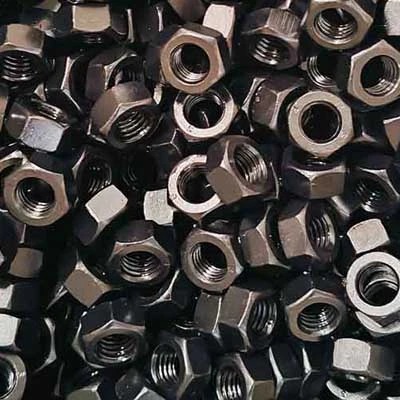
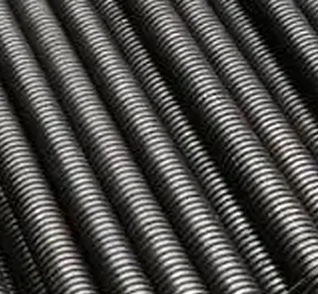
For high-pressure flange connections, ASTM A193 B7 stud fasteners are commonly paired with ASTM A194 Grade 2H heavy hex nuts to create a complete bolting assembly.
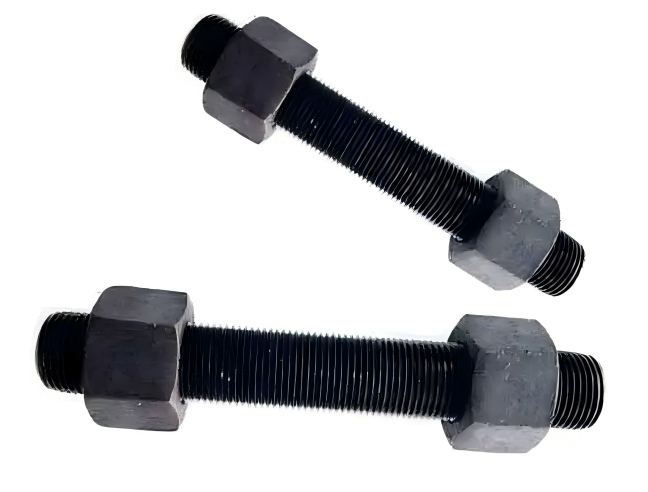
The popularity of B7 stud bolts comes from several advantages:
B7 alloy steel provides sufficient tensile strength for demanding flange applications.
This makes it suitable for:
Pressure vessels
High-temperature piping
Process equipment
Many petrochemical systems operate at elevated temperatures where standard carbon steel fasteners may lose mechanical capability.
B7 alloy steel maintains reliable performance under these conditions.
Because ASTM A193 B7 is widely recognized in industrial specifications, it simplifies procurement and replacement processes.
Different environments require different stud bolt grades.
| Grade | Material Type | Common Application | Main Characteristics |
|---|---|---|---|
| ASTM A193 B7 | Chromium-moly alloy steel | General oil & gas service | High strength and temperature resistance |
| ASTM A193 B7M | Modified alloy steel | Sour service environments | Controlled hardness and corrosion-related performance |
| ASTM A193 B8 | 304 stainless steel | General corrosion-resistant applications | Good corrosion resistance |
| ASTM A193 B8M | 316 stainless steel | Marine and chemical applications | Improved chloride resistance |
Choosing the correct grade requires understanding the actual service environment.
For example:
A refinery steam line may require B7 alloy steel.
An offshore system exposed to seawater may require stainless steel.
A sour gas application may require materials selected according to hydrogen sulfide exposure requirements.
Corrosion is a major concern in oil & gas and chemical processing industries.
Stainless steel stud bolts are often selected for applications involving:
Saltwater exposure
Chemical processing
Outdoor installation
Humidity
Chloride environments
Compared with standard carbon steel fasteners, stainless steel provides:
Improved corrosion resistance
Longer service life
Reduced maintenance requirements
Better environmental durability
For applications involving marine exposure or chemical processing conditions, chemical stud bolt solutions can provide suitable fastening performance for specialized industrial environments.
Corrosion can significantly reduce the service life and mechanical reliability of flange fasteners.
Common corrosion mechanisms include:
Outdoor oil & gas equipment may experience:
Rain
Humidity
Salt spray
Temperature changes
Offshore platforms are particularly vulnerable due to continuous exposure to marine conditions.
Petrochemical facilities may involve:
Acids
Chlorides
Hydrogen sulfide
Chemical processing fluids
Material compatibility is essential to prevent premature failure.
Certain environments can cause cracking when tensile stress combines with corrosive conditions.
Preventive measures include:
Proper material selection
Controlled hardness requirements
Suitable protective treatments
Correct installation procedures
Even when the correct stud bolt material and grade are selected, improper installation can compromise the entire flange connection. In oil & gas and petrochemical systems, achieving the correct bolt preload is essential because flange sealing performance depends on maintaining consistent gasket compression.
Common installation methods include:
Torque tightening
Hydraulic tensioning
Turn-of-nut tightening
Controlled bolting procedures
The appropriate method depends on:
Bolt diameter
Flange size
Pressure rating
Equipment accessibility
Project specifications
Torque tightening is widely used for small and medium-sized flange assemblies.
The applied torque is influenced by:
Stud bolt diameter
Material grade
Thread condition
Lubrication
Friction coefficient
A simplified relationship between torque and preload is:
T = K × D × F
Where:
| Symbol | Meaning |
|---|---|
| T | Applied tightening torque |
| K | Nut factor related to friction |
| D | Bolt diameter |
| F | Required preload force |
Because friction can significantly affect the final bolt load, proper lubrication and controlled tightening procedures are important.
Incorrect torque application may cause:
| Problem | Possible Result |
|---|---|
| Under-tightening | Gasket leakage |
| Over-tightening | Bolt overstress or flange deformation |
| Uneven tightening | Unequal gasket compression |
For critical oil & gas equipment, tightening procedures are normally specified by engineering standards or project requirements.
Hydraulic tensioning is commonly used for large flange connections where accurate preload control is required.
It is frequently applied in:
Offshore platforms
Large pressure vessels
Pipeline systems
Power generation equipment
Heavy industrial machinery
Advantages include:
More accurate bolt loading
Reduced friction influence
Improved tightening consistency
Faster installation for large assemblies
Compared with conventional torque tightening, hydraulic tensioning can provide better control when working with large-diameter stud bolts.
Stud bolt failures in oil & gas facilities can result from several factors, including incorrect material selection, installation errors, corrosion, and fatigue loading.
Understanding these failure mechanisms helps engineers improve flange reliability.
Corrosion is one of the most common causes of fastener degradation.
Potential causes include:
Saltwater exposure
Chemical contamination
Hydrogen sulfide environments
Moisture accumulation
Poor surface protection
Corrosion may reduce:
Effective bolt diameter
Tensile strength
Fatigue resistance
For offshore and chemical processing applications, corrosion-resistant materials and suitable protective treatments are often required.
Oil & gas equipment frequently experiences repeated mechanical stress.
Sources of cyclic loading include:
Pipeline pressure fluctuations
Pump vibration
Compressor operation
Thermal expansion and contraction
Over time, repeated stress cycles can cause fatigue damage.
Reducing fatigue risk requires:
Correct preload control
Suitable material selection
Proper flange alignment
Accurate installation procedures
Some oil & gas environments contain hydrogen sulfide (H₂S), creating additional material challenges.
Sour service applications require careful evaluation of:
Material hardness
Chemical composition
Heat treatment
Applicable industry requirements
In these environments, fastener selection must follow project specifications and relevant sour service requirements.
Extending stud bolt service life requires a combination of correct selection, installation, and maintenance practices.
Material selection should match:
Operating temperature
Process media
Corrosion exposure
Pressure conditions
Using an unnecessarily low-grade material may create reliability risks, while selecting unsuitable premium materials may increase project costs without improving performance.
Depending on application requirements, protective treatments may include:
Coatings
Plating
Anti-corrosion compounds
Specialized surface treatments
The selected protection method should be compatible with operating conditions.
Proper tightening practices help ensure:
Correct preload
Uniform gasket compression
Reduced leakage risk
Improved fatigue resistance
Installation records and inspection procedures are particularly important for critical equipment.
Supplier selection plays an important role in ensuring fastener quality and project reliability.
Industrial buyers should evaluate several factors before choosing a supplier.
A qualified supplier should have the ability to produce stud bolts according to different requirements, including:
Material grades
Thread specifications
Custom dimensions
Surface treatments
Professional production capabilities help maintain consistent product quality across large projects.
Oil & gas projects often require complete product documentation.
Important quality records include:
| Document | Purpose |
|---|---|
| Material Test Certificate (MTC) | Confirms chemical composition and mechanical properties |
| Inspection Report | Verifies dimensions and product quality |
| Heat Treatment Record | Confirms manufacturing process control |
| Traceability Records | Links products to production batches |
Reliable documentation helps engineers verify compliance with project requirements.
Industrial applications often require customized solutions rather than standard catalog products.
A capable supplier should support:
Non-standard dimensions
Special materials
Different thread requirements
Project-specific packaging
HKBOSTEC provides industrial fastening solutions for customers requiring dependable performance in demanding applications. Through controlled manufacturing processes, quality inspection procedures, and technical support, HKBOSTEC helps customers select suitable stud bolts for oil & gas, petrochemical, and industrial applications.
Stud bolts provide reliable clamping force for flange assemblies and help maintain gasket compression under high pressure, temperature changes, and demanding operating conditions.
ASTM A193 B7 alloy steel is one of the most widely used materials because it provides high strength and good temperature resistance for pressure applications.
Yes. Stainless steel stud bolts are often selected for offshore and marine environments because they provide improved corrosion resistance against moisture and chloride exposure.
ASTM A194 Grade 2H heavy hex nuts are commonly paired with ASTM A193 B7 stud bolts for industrial flange applications.
Reuse depends on inspection results, project requirements, and the condition of the fastener. Critical pressure applications often require replacement when damage, corrosion, or deformation is identified.
Buyers should provide:
Material grade
Bolt diameter
Length
Thread specification
Applicable standards
Operating conditions
Quantity requirements
Providing complete technical information helps suppliers recommend suitable fastening solutions.
Stud bolts play an essential role in maintaining the reliability of oil & gas and petrochemical flange connections. Because these industries operate under high pressure, elevated temperatures, corrosive environments, and continuous mechanical stress, selecting the correct fastening solution requires careful consideration of material properties, industry standards, and installation practices.
Materials such as ASTM A193 B7 alloy steel, B7M, B8, and B8M stainless steel provide different performance characteristics for specific operating conditions. Engineers should evaluate temperature requirements, corrosion risks, pressure conditions, and service environments before selecting stud bolts.
Beyond product quality, supplier capability is also critical. Consistent manufacturing processes, material traceability, inspection documentation, and technical support help ensure that fastening systems perform reliably throughout the equipment lifecycle.
HKBOSTEC supports industrial customers with reliable fastening solutions designed for demanding applications. By combining manufacturing expertise, quality control, and application knowledge, HKBOSTEC helps customers build secure and durable flange connections for oil & gas, petrochemical, and industrial projects.
https://www.asme.org/codes-standards/find-codes-standards/b16-5-pipe-flanges-flanged-fittings
https://www.asme.org/codes-standards/find-codes-standards/b31-3-process-piping
https://www.api.org/products-and-services/standards

 English