Search
Carriage bolts are simple in appearance, but selecting them correctly requires more than choosing a diameter and length. The rounded head, square neck, thread, nut, washer, base material and installation method work as one fastening system. A mismatch in any one of these elements can cause the bolt to spin, crush timber, loosen under vibration, corrode prematurely or fail to develop the intended clamp load.
This guide is written for engineers, distributors, project buyers, furniture manufacturers, construction contractors and maintenance teams that need a practical way to specify and purchase carriage bolts. It explains how the fastener works, how to compare types and materials, how to measure a bolt, how to install it in wood or metal, and what information a supplier needs before quoting a production order.
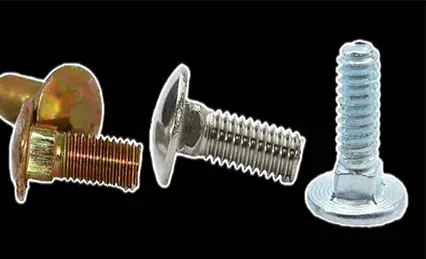
A carriage bolt is a threaded fastener with a smooth round head and a square neck below the head. The square neck is designed to resist rotation while the nut is tightened from the opposite side. It is commonly used where a low-profile, snag-resistant head and one-sided wrench access are useful, including timber frames, furniture, guards, brackets, trailers and general industrial assemblies.
A carriage bolt is a headed threaded fastener whose round head provides a smooth exposed surface and whose square neck resists turning after it is seated in the joint material.
The term is often used interchangeably with coach bolt or round head square neck bolt. In many markets, “coach bolt” refers to the same general geometry, although regional standards and commercial catalogs may use the names differently. The defining feature is not the name but the combination of a domed head and a non-round neck intended to lock into the workpiece.
The head normally has no slot, recess or external wrenching flats. That means the installer does not drive the bolt from the head side. Instead, the bolt is inserted through aligned holes, the square neck is pulled into the material, and a nut is tightened on the threaded end. Once the neck is properly seated, the bolt should remain stationary while the nut turns.
The smooth head serves three practical purposes. First, it reduces snagging on clothing, cables, packaging or moving items. Second, it creates a cleaner visible surface than a conventional hex head. Third, it offers a degree of tamper resistance because the exposed head has no normal drive feature. This does not make the joint security-rated, but it can discourage casual removal from the head side.
For commercial supply, buyers can review Befast carriage bolts as the main product family. The page should be used for grade, material, finish and bulk quotation discussions, while this article answers selection and installation questions.
Carriage bolts work by converting nut torque into clamp load while the square neck mechanically reacts against the surrounding wood, metal or prepared square hole to prevent head rotation.
When the nut is tightened, the bolt is placed in tension and the joined parts are compressed. The square neck is not intended to carry the entire service load by itself. Its main role is anti-rotation during assembly and, depending on the joint design, during later maintenance. The clamped parts, bolt shank, threads, nut and washer share the functional load path.
In timber, the square corners of the neck can embed into the fibers. The connection works best when the pilot hole is large enough for the round shank but not so oversized that the neck cannot bite. In metal, the hole may be punched or laser-cut with a square feature, or the bolt may be used in a prepared slot or bracket designed for the neck. A standard oversized round hole in thin sheet may not restrain the neck, especially after repeated tightening.
The installation sequence matters. If the nut is tightened before the neck is aligned, the corners can tear or polish the material instead of seating. If the installer uses an impact wrench at full speed before the neck is engaged, the bolt may spin and enlarge the hole. A controlled initial pull-down followed by final tightening is usually more reliable.
Clamp load should be based on the joint design, fastener specification, lubrication condition and applicable engineering procedure. Torque values copied from a generic chart can be misleading because coatings, thread friction, nut style and surface condition can change the torque-to-tension relationship substantially.
Carriage bolt anatomy consists of the head, square neck, unthreaded or threaded shank, external thread, end point and the mating nut-and-washer system.
The round or domed head is the visible bearing feature on one side of the joint. Its diameter and head height depend on the standard and size. A larger head can distribute load over a wider area, but it does not eliminate the need to check bearing stress in soft timber, plastics or thin sheet.
The square neck sits immediately below the head. Its width across flats, height and corner geometry are critical to anti-rotation performance. A neck that is too small for the prepared feature can spin. A neck that is forced into brittle or thin material can crack, distort or tear the workpiece.
Some carriage bolts are fully threaded, while others have a partial thread with an unthreaded grip length. A partially threaded bolt can place a smooth shank through the shear plane, which may be desirable in some joints. A fully threaded version offers flexibility across varying material thicknesses but places threads in the shear plane unless the design prevents it.
The nut must match the thread system, diameter, pitch, material and mechanical class. A washer can spread bearing pressure, protect the surface and give the nut a more consistent bearing face. In timber, a sufficiently large washer is often important because a small nut bearing area can crush the fibers before the intended bolt tension is reached.
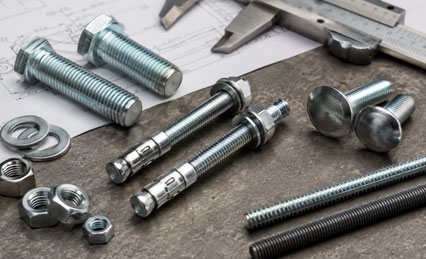
Carriage bolt types differ mainly in neck design, head profile, thread coverage, material, strength class, surface finish and the type of material they are intended to lock into.
This is the best-known form. It is suitable when the square neck can embed in wood or fit a square feature in metal. It is widely used for frames, furniture, fences, brackets, agricultural equipment and general construction assemblies.
A short-neck design is useful when the connected material is thin and a standard neck would protrude through the first layer or interfere with fit-up. The correct neck length depends on the head-side material thickness and hole geometry.
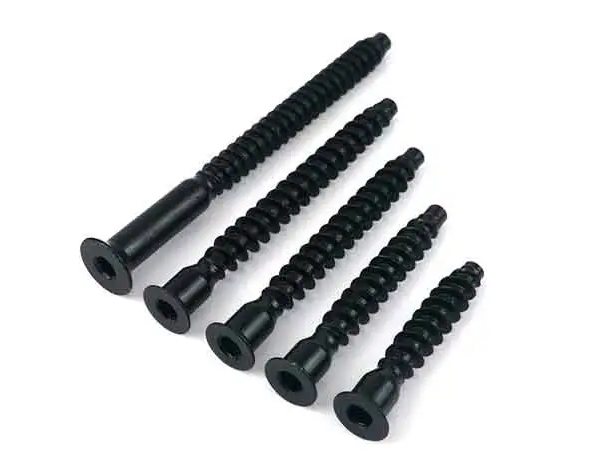
Ribs or fins can provide anti-rotation in sheet metal or molded components where a square neck is not ideal. These are related industrial fasteners and may be specified under different standards or proprietary drawings. Buyers should not assume they are interchangeable with a conventional square-neck carriage bolt.
Metric products are specified with an M diameter and pitch, while inch products use nominal diameter and threads per inch. Mixing thread systems is a common sourcing error. For example, an M10 nut is not a substitute for a 3/8-inch nut even when the diameters appear close.
Custom products may use a special head diameter, neck width, neck height, thread length, point, marking, coating or packaging requirement. A drawing is strongly recommended whenever the requested geometry does not match a recognized standard.
Carriage bolt material and strength grade determine the bolt’s mechanical capacity, corrosion behavior, temperature suitability, coating compatibility and required mating nut class.
For carbon and alloy steel metric fasteners, property classes such as 4.8, 8.8, 10.9 and 12.9 communicate mechanical-property categories under systems such as ISO 898-1. The first number multiplied by 100 indicates nominal tensile strength in megapascals, while the second number indicates the nominal yield-to-tensile ratio multiplied by ten. Therefore, property class 8.8 conventionally represents 800 MPa nominal tensile strength and a 0.8 ratio, or about 640 MPa nominal yield strength. Property class 10.9 conventionally represents 1,000 MPa and about 900 MPa, while 12.9 represents 1,200 MPa and about 1,080 MPa.
These class numbers are not automatic guarantees for every non-standard product. Diameter range, manufacturing method, heat treatment, test method and the exact governing standard must be confirmed. The finished fastener should be tested and marked as required by the purchase specification.
Stainless steel designations such as A2-70 and A4-80 combine a stainless group with a property class. A2 is commonly associated with austenitic stainless grades used in general corrosion-resistant applications, while A4 provides improved resistance in many chloride-containing environments. The “70” and “80” classes refer to minimum tensile-strength categories of 700 MPa and 800 MPa under the relevant standard conditions. Material selection still requires review of the actual chemical environment, temperature, crevice conditions and galvanic pairing.
| Material or Class | Typical Reason to Select | Main Limitations | Information to Confirm |
|---|---|---|---|
| Low-carbon steel, lower property class | General assemblies, furniture and moderate-load applications | Lower mechanical capacity; usually needs a protective finish outdoors | Property class, coating, thread fit and intended load |
| Class 8.8 alloy or carbon steel | Machinery, brackets and higher-load industrial joints | Requires suitable nut class and controlled manufacturing | Heat treatment, hardness, proof/tensile test and coating |
| Class 10.9 or 12.9 | Compact, high-strength joints where specifically engineered | Greater sensitivity to process control, hydrogen risk and misuse | Standard, diameter range, coating process and verification tests |
| A2 stainless steel | Clean appearance and general atmospheric corrosion resistance | Not ideal for every chloride, acid or elevated-temperature service | Actual stainless grade, property class and passivation condition |
| A4 stainless steel | Marine-adjacent, wet or more aggressive environments | Higher cost; galling can occur during assembly | Grade, lubrication policy, mating nut and service chemistry |
| Hot-dip galvanized steel | Outdoor timber and construction exposure | Thick coating affects thread fit; mating nut must be compatible | Coating standard, over-tapped nut, coating thickness and appearance |
Correct carriage bolt size selection requires matching diameter, thread pitch, grip length, overall length, neck geometry and head dimensions to the joint material and required load.
Start with the governing drawing or engineering requirement. Do not select diameter only by the hole that happens to exist. The bolt diameter influences tensile area, shear area, bearing stress and the available head and neck geometry. The hole size must provide assembly clearance while still allowing the neck to restrain rotation.
Length is commonly measured from the underside of the head to the end of the bolt for this fastener style. The required length must include the total clamped thickness, washer thickness, nut height and sufficient thread protrusion. Too little protrusion can leave incomplete thread engagement. Excessive protrusion can interfere with equipment or create a snag hazard.
Grip length is the unthreaded portion available through the joint. If a partial-thread bolt is used, confirm that the nut can tighten fully without running out of thread and that the thread transition does not sit in an undesirable shear plane. If a fully threaded bolt is used, confirm that thread-bearing effects are acceptable.
For timber, consider moisture movement and long-term compression. Wood can shrink, swell and relax after installation, reducing clamp load. Large washers or load-distributing plates may be required, and maintenance retightening may be part of the design. For metal, check the square-neck fit, plate thickness and risk of hole deformation.
Carriage bolts differ from hex bolts, lag screws, flange bolts and anchor bolts primarily in head drive, anti-rotation method, access requirements and intended joint geometry.
| Fastener | Head or Drive | Anti-Rotation Method | Best-Fit Applications | Important Limitation |
|---|---|---|---|---|
| Carriage bolt | Smooth round head | Square or shaped neck | Timber, guards, frames, brackets, smooth exposed surfaces | Needs a material or hole feature that can restrain the neck |
| Hex bolt | External hex head | Wrench holds the head | General machinery, steelwork and serviceable joints | Usually requires tool access on both sides during assembly |
| Lag screw | Hex or other driven head | Threads engage directly in wood | Wood connections without a through-bolt and nut | Withdrawal capacity depends heavily on wood and pilot hole |
| Flange bolt | Hex head with integrated flange | Wrench holds the head | Automotive and machinery assemblies needing broader bearing area | Flange is not equivalent to every separate washer requirement |
| Anchor bolt | Varies | Embedded or expansion mechanism | Concrete anchorage and base plates | Requires anchor-specific design, installation and substrate checks |
A carriage bolt should not be chosen merely because its head looks cleaner. Where high preload, repeated disassembly or precise torque control is required, a conventional hex-head system may offer easier reaction and inspection. Where the head side must remain smooth and the neck can seat reliably, the carriage design can reduce tool access and simplify assembly.
Installing carriage bolts in wood requires a correctly sized pilot hole, careful neck seating, a load-distributing washer and controlled tightening that avoids crushing the timber.
Confirm the joint design. Check bolt diameter, length, washer size, nut class, timber thickness, edge distance and spacing against the drawing or applicable design method.
Mark and drill aligned holes. Keep the drill square to the surface. A misaligned hole can force the bolt to bend or prevent full head seating.
Insert the bolt from the smooth-head side. Align the square neck with the grain and prepared hole. Do not hammer aggressively on a hardened or stainless bolt.
Seat the neck gradually. Fit the washer and nut, then tighten slowly so the neck pulls into the wood. A temporary clamp or controlled tap may assist, but the wood should not split.
Install the correct washer. The washer distributes nut bearing pressure. Soft wood and high clamp force may require a larger washer or plate than a general flat washer.
Tighten to the approved condition. Use the project specification rather than a generic torque value. Stop if the head sinks excessively, the fibers crush, the bolt spins or the washer cups.
Inspect after the wood stabilizes. Outdoor timber may change moisture content. The maintenance plan may require checking joint tightness after an initial service period.
Where a standard washer is suitable, Befast supplies flat washers in carbon steel and stainless steel options. Washer hardness, outside diameter and finish should match the bolt, nut, substrate and environment rather than being selected only by nominal bolt diameter.
Installing carriage bolts in metal requires a square, slotted or otherwise restrained head-side feature that prevents the neck from rotating without tearing or permanently enlarging the sheet.
For fabricated brackets, the preferred approach is to design the hole around the actual neck dimensions and production tolerances. A laser-cut square hole, punched square feature or captive bracket can give predictable engagement. The hole corners should not introduce unacceptable stress concentration in a fatigue-sensitive component.
Thin sheet deserves special attention. If the neck height exceeds sheet thickness, the neck may not seat against a stable surface. If the sheet is too soft, tightening can round the hole. In such cases, a rib-neck bolt, a captive fastener, a welded feature or a conventional bolt held from both sides may be more appropriate.
During assembly, start the nut by hand to prevent cross-threading. Pull the head down slowly until the neck is fully engaged. If the bolt begins to rotate, stop and correct the fit rather than continuing with higher impact force. Final tightening and inspection should follow the joint specification.
Common carriage bolt failures include spinning, incomplete neck seating, wood crushing, thread stripping, corrosion, galling, insufficient thread engagement and loss of clamp load.
This usually means the neck has not engaged, the hole is oversized, the material is damaged or the selected neck geometry is unsuitable. Corrective action may include replacing the damaged part, using the proper hole shape or changing fastener type. Holding the smooth head with improvised gripping tools can damage the finish and does not solve the root cause.
Excessive embedment may result from over-tightening, soft or wet wood, an undersized head bearing area or insufficient load distribution. Review the washer or plate, torque procedure and joint design. The goal is a stable clamped joint, not maximum visible indentation.
Possible causes include a mismatched pitch, damaged threads, coating buildup, contamination, cross-threading or an incompatible nut class. Stop before the joint seizes. Verify thread gauges and mating components from the same approved specification.
Austenitic stainless fasteners can gall when similar surfaces slide under pressure, particularly with high speed, dry threads or rough surfaces. Use an approved assembly procedure, compatible lubricant where permitted, slower tightening speed and verified mating components. Lubrication changes torque-tension behavior, so torque must be adjusted by engineering guidance.
Early corrosion can result from an unsuitable material or coating, coating damage, water traps, chemical exposure or galvanic contact with another metal. Selecting stainless steel does not automatically solve every environment. The full joint and service chemistry must be evaluated.
Carriage bolt applications are best suited to assemblies that benefit from a smooth head, anti-rotation neck, through-bolt clamping and nut access from the opposite side.
Wood construction: decks, fences, timber frames, posts, outdoor furniture and playground structures where the neck can embed in wood.
Furniture manufacturing: beds, tables, shelving, institutional furniture and knock-down frames requiring a clean visible head.
Material handling: guards, partitions, racks and accessories where a snag-resistant exposed surface is useful.
Transportation equipment: trailers, body accessories and non-critical brackets when the design and specification permit.
Agricultural equipment: timber-and-steel assemblies, guards and replaceable components exposed to dirt and weather.
General fabrication: punched brackets, modular frames and assemblies that provide a square neck seat.
For aggressive outdoor conditions, buyers may consider stainless steel carriage bolts, but the actual choice between 304-type, 316-type, galvanized or coated alloy steel should be based on corrosion severity, mechanical requirements, maintenance and cost.
A complete carriage bolt request for quotation identifies the standard or drawing, dimensions, material, property class, finish, quantity, inspection documents, packaging and application conditions.
At minimum, provide the following information:
Applicable standard, part number or controlled drawing revision.
Metric or inch system, nominal diameter and thread pitch.
Length measured according to the specified product standard.
Full-thread or partial-thread requirement and required thread length.
Head diameter, head height, square-neck width and neck height if non-standard.
Material and mechanical property class or ASTM/ISO designation.
Surface finish, coating standard, color and corrosion requirement.
Mating nut and washer requirements.
Order quantity, annual demand and preferred lot size.
Inspection, testing, marking, traceability and certificate requirements.
Packaging, label, pallet and destination requirements.
Application environment, especially outdoor, marine, chemical or high-temperature exposure.
A sample alone is not an ideal specification because wear, coating buildup and measurement method can create uncertainty. For repeat orders, approve a drawing or standard callout and control revisions. If a physical sample is necessary, combine it with measured critical characteristics and intended function.
A qualified carriage bolt supplier should demonstrate control of raw material, forming, threading, heat treatment, coating, dimensional inspection, mechanical testing, traceability and export packaging.
Begin by asking whether the supplier manufactures the relevant size and class routinely or subcontracts critical operations. Subcontracting is not automatically a problem, but responsibilities, approved processors and test records should be clear. For high-strength classes, heat treatment and hydrogen-risk controls deserve particular attention.
Request a control plan or inspection outline for critical dimensions such as thread, neck width, neck height, head dimensions, length and straightness. Ask how gauges are calibrated and how nonconforming lots are segregated. For coated fasteners, confirm thread allowance, coating thickness and post-treatment inspection.
Mechanical-property evidence should match the ordered specification and lot. Depending on the product, this may include hardness, tensile, wedge, proof-load or other required tests. A generic certificate that does not identify the lot, size, material or test method adds limited assurance.
Packaging also affects quality. Heavy bolts can damage each other during transport, while mixed sizes can create expensive sorting at the customer’s plant. Specify bag or carton weight, internal protection, label content, pallet strength and moisture control.
Befast is a China-based fastener manufacturer offering bolts, nuts, washers, studs and screws with product, material and application support for international B2B buyers.
According to the company information published on chinbefast.com, Befast reports more than two decades of fastener experience, a monthly production capacity of 6,000 tons, a team of 120 professionals and 35 advanced production machines. Buyers should confirm the exact capacity, process route, certification and available tests for their specific product before placing an order.
The practical advantage of using a multi-category fastener source is assembly coordination. A carriage bolt can be quoted with the matching nut, washer, material, finish, packaging and documents rather than treated as an isolated part. This reduces the risk of receiving components that share a nominal diameter but do not match in pitch, coating allowance, strength or corrosion behavior.
For an efficient quotation, send Befast the standard or drawing, size, material, grade, finish, quantity, application and destination. Where requirements are incomplete, the technical and sales teams can identify the missing fields before production approval.
The following carriage bolt FAQs answer common selection, measurement, installation and sourcing questions in a direct format.
A carriage bolt has a smooth round head and a square neck that resists rotation after seating, while a regular hex bolt has a wrenchable head that is normally held during tightening. Carriage bolts are useful when the exposed side should be smooth or tool access is available mainly from the nut side. Hex bolts are often easier to service where tools can reach both sides and precise head reaction is required.
A washer is often recommended under the nut because it spreads bearing pressure, protects the surface and provides a more consistent bearing face. It is especially important in soft wood, slotted holes and thin materials. However, washer type, hardness and diameter should be selected for the joint. A standard flat washer is not automatically sufficient for every structural or high-load connection.
Carriage bolt length is generally measured from the underside of the head to the end, but the governing standard or drawing should be checked. A complete specification also includes nominal diameter, pitch, thread length, head dimensions and square-neck dimensions. For purchasing, do not provide only total length and diameter if the product is non-standard.
Yes, provided the metal component has a feature that can restrain the square or shaped neck. A properly sized square hole, punched feature or captive bracket is more reliable than an oversized round hole. Thin sheet can deform or allow the neck to spin, so sheet thickness, hole geometry and tightening method must be evaluated.
Not necessarily. Stainless steel is selected primarily for corrosion resistance, while carbon or alloy steel can be supplied in a wide range of mechanical property classes. An A2-70 stainless bolt and a class 8.8 steel bolt have different mechanical and corrosion characteristics. The correct choice depends on required load, environment, temperature, maintenance and compatible nut and washer materials.
Provide the standard or drawing, metric or inch size, diameter, pitch, length, thread coverage, material, property class, finish, mating nut and washer, quantity, inspection documents, packaging and destination. Include the application environment when corrosion, temperature, vibration or safety is important. Complete RFQ data reduces clarification time and prevents price comparisons between technically different products.
Correct carriage bolt selection depends on the complete joint, not only the bolt’s round head. The square neck must engage the material, the diameter and length must fit the load path, the nut and washer must match the thread and strength, and the material or coating must suit the environment.
For wood, focus on hole quality, neck seating, bearing area and long-term compression. For metal, focus on the anti-rotation feature and sheet strength. For bulk sourcing, control the standard, drawing, mechanical class, finish, test documents and packaging before comparing price.
Befast can support B2B buyers with carriage bolts and related nuts and washers across multiple materials and grades. A detailed RFQ is the fastest route to an accurate technical review and a quotation that can be compared on a like-for-like basis.
These references provide authoritative background on fastener mechanical properties and stainless steel selection.
ISO 898-1: Mechanical properties of carbon and alloy steel bolts, screws and studs
ISO 3506-1: Mechanical properties of corrosion-resistant stainless steel bolts, screws and studs
ASTM F3125/F3125M: High-strength structural bolts and assemblies

 English