Search
Carriage bolts are precision-engineered fasteners widely used in construction, machinery, furniture manufacturing and industrial assemblies. Their rounded head and square neck structure provide a unique anti-rotation function, allowing reliable fastening without requiring access to the bolt head during tightening.
For international buyers, choosing the correct carriage bolt involves evaluating more than dimensions. Material selection, strength requirements, corrosion resistance, manufacturing standards and application conditions all influence the final fastening performance.
This article provides a complete overview of carriage bolts, including structural carriage bolts, carriage bolt uses, installation methods, material options, quality standards and purchasing considerations.
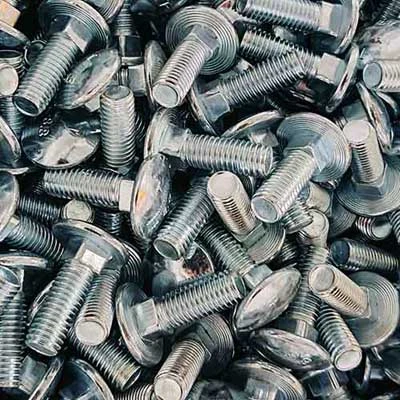
Carriage bolts are fasteners with a smooth rounded head and a square neck directly below the head. The square neck grips the installation material and prevents the bolt from rotating while the nut is tightened.
This design makes carriage bolts ideal for applications where a clean surface finish and stable connection are required. They are frequently selected for wooden structures, metal brackets, machinery components and outdoor assemblies.
The structure of a carriage bolt determines how effectively it performs in different applications. A typical carriage bolt consists of four important parts: the head, square neck, threaded section and surface treatment.
| Component | Purpose |
|---|---|
| Round head | Provides a smooth external appearance and reduces exposed edges. |
| Square neck | Prevents rotation during tightening. |
| Threaded shaft | Creates secure clamping force with nuts. |
| Coating | Improves corrosion resistance and service life. |
Woodworking: Carriage bolts are a staple in professional carpentry and home woodworking projects, such as constructing decks, fences, and various wooden structures. Their smooth, domed heads provide a clean, snag-free finish, while the square necks bite into the timber to provide a secure fastening solution for attaching heavy wooden components. For installing carriage bolts in wood, pre-drilling the correct hole size helps the square neck seat firmly and prevents splitting.
Metal Fabrication: In industrial metal fabrication, carriage bolts uses extend to joining heavy-gauge metal plates, brackets, and structural elements. Their robust construction and reliable fastening capabilities make them suitable for heavy-duty applications where a low-profile bolt head is required to prevent interference with moving parts or to improve safety. This carriage bolt use is common where a smooth head is preferred on the exposed side of equipment or frames.
Construction: These fasteners find extensive use in large-scale construction projects for securing critical beams, posts, and structural components. By providing a strong and durable connection that resists vibration, structural carriage bolts help to ensure the long-term stability and integrity of a building's skeleton. When installing carriage bolts in structural assemblies, tightening to the specified torque ensures a reliable, vibration-resistant joint.
Outdoor Applications: Due to their superior corrosion-resistant properties, carriage bolts uses are particularly prominent in environments exposed to the elements. They are ideal for:
Building outdoor furniture and benches.
Constructing children's playsets and swing sets.
Securing landscaping structures and retaining walls.
Pro Tip: For maximum longevity in wet environments, always opt for stainless steel or hot-dipped galvanized carriage bolts to withstand constant exposure to moisture and environmental elements. For outdoor carriage bolt use, matching the bolt material and washers to the environment helps reduce corrosion and extends service life.
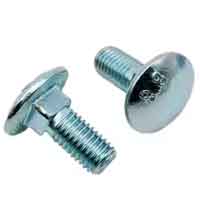
Round Head: Carriage bolts feature a smooth, rounded head with a flat underside. This design provides a neat, tamper-resistant, and finished appearance when visible. Because the head has no drive slot, installing a carriage bolt ensures a snag-free surface, which is ideal for outdoor furniture, decking, and safety-conscious applications.
Square Neck: Beneath the head, carriage bolts have a square or rectangular section known as the neck or shank. This is a critical feature for stability; the square neck prevents the bolt from rotating once it is seated into a pre-drilled hole. This self-locking mechanism allows for a one-tool installation process, as the bolt stays fixed while you tighten the nut from the opposite side.
Full Thread: Most carriage bolts feature a fully threaded shaft, meaning the threads run along the entire length of the bolt. This design provides increased gripping strength and maximum versatility. Whether you are fastening thin metal plates or thick timber, a full-thread bolt offers consistent tension and reliable hold throughout the entire connection.
Flat Washer and Nut: To complete the assembly, carriage bolts are typically paired with a flat washer and a nut. The washer is essential for distributing the load over a larger surface area to prevent the bolt from pulling through the material. Properly installing a carriage bolt with these components ensures a secure, long-lasting fasten that resists loosening over time.
Secure Fastening: The square neck design of carriage bolts prevents rotation when tightened, resulting in a secure and stable connection that is resistant to loosening over time.
Neat Appearance: The smooth, rounded head of carriage bolts provides a clean and finished look when installed, making them suitable for visible applications where aesthetics are important.
Versatility: Carriage bolts are compatible with a wide range of materials, including wood, metal, and plastic, making them a versatile fastening solution for various projects and applications, highlighting their broad carriage bolts uses.
Ease of Installation: Installing a carriage bolt is easy by using basic tools, such as a wrench and a socket or spanner. Their straightforward installation process makes them accessible to DIY enthusiasts and professionals alike.
Installing carriage bolts requires correct preparation to ensure the square neck properly locks into the material. Incorrect installation may reduce fastening performance and cause loosening during operation.
Select the correct bolt diameter and length.
Prepare a suitable installation hole.
Insert the carriage bolt through the connected materials.
Ensure the square neck engages correctly.
Add washer and nut, then tighten securely.
Carriage bolts are manufactured using different materials to satisfy various performance requirements. Common options include carbon steel, stainless steel and coated steel.
Carbon steel: suitable for general industrial fastening.
Stainless steel: recommended for corrosion-resistant applications.
Zinc-coated steel: provides additional surface protection.
Common specifications include metric sizes from approximately M3 to M24 and customized lengths according to project requirements. Professional manufacturers normally control tensile strength, thread accuracy and dimensional consistency according to international standards such as ISO and DIN specifications.
| Fastener | Main Advantage | Applications |
|---|---|---|
| Carriage Bolts | Anti-rotation design and smooth appearance | Construction, furniture, machinery |
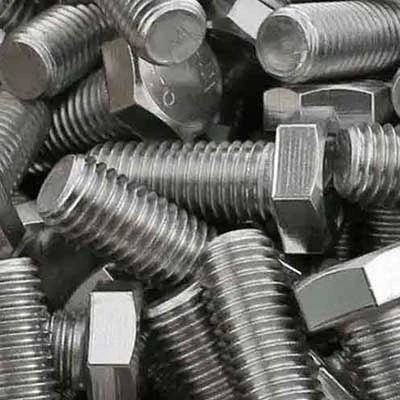
| Hex Bolts | High load capacity and easy maintenance | Heavy equipment |
| Screws | Fast installation | General assembly |
High-quality carriage bolts require strict control throughout the entire manufacturing process, from raw material selection to final inspection. Befast focuses on consistent product quality by implementing professional manufacturing procedures, precise machining processes, and comprehensive quality checks to ensure reliable fastening performance for global customers.
The quality control process begins with material inspection. Before production, raw materials are carefully evaluated to ensure they meet required chemical composition, mechanical performance, and application requirements. This helps maintain consistent strength, durability, and corrosion resistance across different batches of carriage bolts.
During manufacturing, Befast applies precision machining and forming processes to maintain accurate dimensions, including bolt diameter, length, head shape, square neck size, and thread specifications. Accurate thread production is especially important because it directly affects installation efficiency, tightening performance, and the long-term stability of the fastening connection.
Surface treatment is another important factor affecting carriage bolt performance. Depending on customer requirements and application environments, Befast provides suitable finishing options to improve corrosion resistance and extend service life, especially for outdoor, industrial, and high-moisture applications.
Before shipment, finished carriage bolts undergo final verification to confirm product consistency and compliance with customer specifications. Inspection items may include dimensional accuracy, thread quality, surface condition, and overall appearance. This quality-focused approach helps reduce assembly problems and ensures that customers receive dependable fastening products for their projects.
As an experienced fastener supplier, Befast provides reliable industrial fasteners solutions for international customers requiring both standard and customized products. With professional production capabilities and flexible manufacturing support, Befast helps customers develop suitable carriage bolt solutions for different industries, including construction, machinery, furniture, and industrial equipment.
Selecting the right carriage bolts requires careful evaluation of application conditions, material compatibility, load requirements, and installation methods. The correct fastener choice not only improves connection reliability but also helps prevent premature failure caused by improper sizing, unsuitable materials, or insufficient corrosion protection.
The first consideration is the application environment. For indoor applications with limited exposure to moisture, standard carbon steel carriage bolts may provide an economical solution. However, outdoor structures, marine environments, and applications exposed to humidity or chemicals often require stainless steel carriage bolts or protective surface coatings to improve corrosion resistance.
Bolt dimensions are another critical factor. Buyers should consider bolt diameter, length, thread type, and the thickness of the materials being connected. Selecting an incorrect size may result in insufficient clamping force or improper installation, affecting the overall stability of the assembly.
Load requirements should also be evaluated before choosing carriage bolts. Applications involving heavy equipment, structural components, or continuous vibration may require stronger fastening solutions, such as structural carriage bolts designed for demanding working conditions.
In addition to product specifications, supplier capability is an important consideration for industrial buyers. A reliable carriage bolt manufacturer should provide consistent quality, accurate production processes, customization support, and technical assistance throughout the purchasing process.
Before placing an order, industrial buyers should review key factors including:
Material selection: Choose suitable materials based on strength requirements and environmental exposure.
Mechanical performance: Confirm that bolt strength meets the requirements of the application.
Corrosion protection: Select appropriate coatings or stainless steel options for long-term durability.
Manufacturing capability: Work with suppliers that can provide stable production quality and customized solutions.
Application compatibility: Ensure the selected carriage bolts match the installation method and connected materials.
By considering these factors, buyers can select carriage bolts that provide secure fastening performance, reduce maintenance requirements, and improve the overall reliability of their products and structures.
Carriage bolts are used for secure connections in wood, metal and structural assemblies where rotation resistance is required.
The square neck under the bolt head locks into the material and prevents rotation during tightening.
Yes. Structural carriage bolts are designed for demanding applications requiring stronger fastening performance.
Carriage bolts are measured by diameter, length, thread specification and head dimensions.
Yes. Befast supports customized sizes, materials and manufacturing requirements.
Carriage bolts are commonly produced according to international specifications including ISO and DIN standards.
Carriage bolts remain an essential fastening solution because they combine simple installation, reliable performance and a clean finished appearance. From standard projects to structural applications, selecting the correct carriage bolt design improves connection safety and product durability.
Befast provides professional carriage bolt manufacturing and customized fastener solutions for global industrial customers. With quality-focused production and application expertise, Befast helps customers achieve reliable fastening performance across different industries.

 English