Search
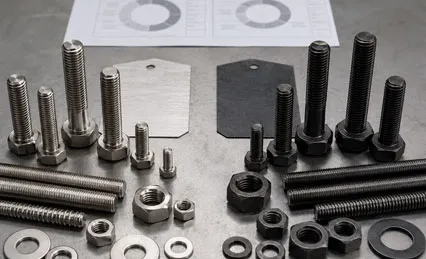
Stud bolts and threaded rods can look almost identical when both are fully threaded, but they are not always specified, manufactured, inspected or used in the same way. In a non-critical support frame, a cut length of threaded rod may perform the required function. In a high-pressure flange, the bolting may require a controlled ASTM grade, specific end preparation, compatible heavy hex nuts, lot traceability and tests that go far beyond a general threaded bar.
This article uses a decision-based structure. It begins with the selection answer, then compares geometry, standards, materials, installation and procurement. It is intended for plant engineers, piping contractors, distributors, construction buyers, OEMs and maintenance teams that need to avoid ordering the right-looking product under the wrong specification.
Choose a stud bolt when the joint or code requires a defined stud configuration, controlled bolting grade, prepared ends, specific nut engagement or critical traceability. Choose threaded rod when a continuously threaded length is needed for supports, anchoring, suspension, bracing or general fabrication and the governing design permits rod stock. Never substitute one for the other without checking the drawing, code and mechanical requirements.
The core difference is that a stud bolt is normally supplied as a finished fastening component for a defined joint, while threaded rod is normally supplied as continuous threaded stock or cut lengths for adaptable fastening and support applications.
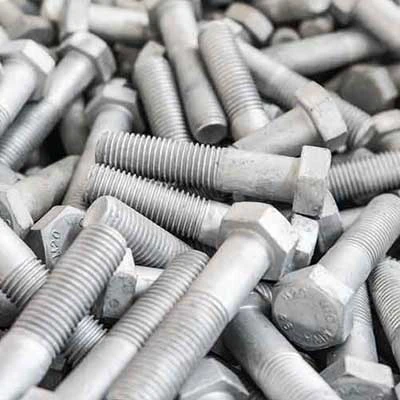
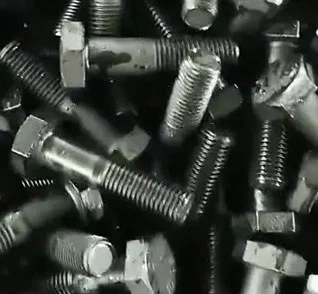
A stud bolt may be fully threaded, double-end threaded or tap-end threaded. Its length, end points, thread engagement and material grade may be controlled by a product or project specification. It is commonly installed with a nut on each end or with one threaded end engaged in a tapped component.
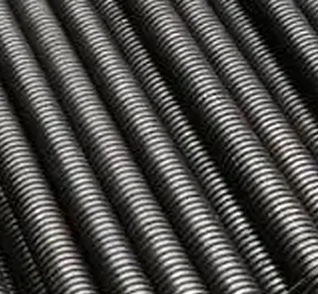
A threaded rod has threads along most or all of its length and is often sold in standard stock lengths or cut-to-length pieces. It is used with nuts, couplers, washers, anchors and support hardware. The rod may be produced to a recognized grade, but general commercial threaded rod should not be assumed to meet the bolting requirements of a pressure flange or critical machine joint.
Befast offers both stud bolts and threaded rods. The product choice should be driven by the approved specification rather than by visual similarity.
A selection matrix distinguishes stud bolts from threaded rods by joint function, specification control, end condition, inspection level and installation method.
| Application Question | Stud Bolt Is Usually Preferred When | Threaded Rod Is Usually Preferred When |
|---|---|---|
| What is the joint? | Pressure flange, turbine casing, critical machine joint, engineered bolted connection | Pipe support, hanger, bracing, general anchor, fixture or fabrication assembly |
| How is it supplied? | Finished cut length with defined ends, grade and lot | Stock length or cut-to-length continuous thread |
| How is it installed? | Nut on both ends or one end into a tapped hole | Nuts, couplers and washers positioned anywhere along the rod |
| What documentation is needed? | Often full heat/lot traceability, MTC and mechanical test evidence | Varies from commercial certificate to full traceability if specified |
| Can it be cut on site? | Normally controlled; field cutting may invalidate end, length or traceability requirements | Often cut to suit if the design and corrosion protection allow |
| What controls selection? | Code, flange standard, equipment drawing and bolting specification | Support design, load, length, material, environment and installation detail |
If the buyer is uncertain, the safest approach is to send the assembly drawing and service conditions to the engineer or manufacturer. Asking for “M20 threaded bar” does not communicate whether the part is a general support rod, a class 8.8 cut stud or an A193 B7 flange stud.
A stud bolt is a headless externally threaded fastener designed to connect components using nuts at both ends or a threaded hole at one end and a nut at the other.
Stud bolts are widely used in piping flanges because they allow nuts to be tightened from both sides and can be replaced without a bolt head. They also appear in engines, turbines, pumps, valves, pressure vessels, molds, machine bases and structural assemblies.
Fully threaded studs have continuous thread over the usable length. Double-end studs have threaded portions at both ends and an unthreaded shank between them. Tap-end studs have one end intended for engagement in a tapped hole, with the other end receiving a nut. Weld studs form another category and are attached through a welding process rather than installed with a nut on both ends.
The stud’s end chamfer or point affects nut starting, handling and length measurement. Project specifications may define point style, thread length and the method for measuring overall length. These details should be present on the drawing or purchase description.
A threaded rod is a long fastener or stock material with continuous external threads that allows nuts, couplers and other threaded components to be positioned along its length.
Threaded rods are common in electrical and mechanical supports, HVAC hangers, pipe racks, ceiling suspension, formwork, temporary bracing, equipment anchoring, frames and general fabrication. They are available in metric and inch thread systems, multiple property classes, stainless grades, brass and various coatings.
Stock rod offers flexibility because it can be cut to length. That flexibility introduces responsibilities. Cutting can expose uncoated material, damage threads, remove markings and separate the piece from its original traceability. The cut end may require chamfering, deburring, coating repair and re-identification.
Coupling nuts can join rod lengths, but the coupler, engagement length and alignment must meet the design. A connection made by simply threading two short lengths into a generic coupler is not automatically equivalent to a continuous rod.
Stud and rod types are defined by thread coverage, end use, installation method, material grade and the standard governing the finished component.
Fully threaded studs maximize available nut positioning and are common in flange bolting. Threads may run end to end except for chamfers. The usable length and nut engagement must match the flange stack-up.
Double-end studs have an unthreaded center shank. They are useful when the design requires a smooth shank, controlled thread lengths or repeated assembly. Each end may use the same or different thread length depending on the drawing.
A tap-end stud screws into a tapped hole in a casting, block or housing. The tap end and nut end can have different thread classes or engagement requirements. Installation depth, thread-locking method and removal procedure should be controlled.
Continuous rod is supplied in standard or custom lengths with thread over the entire length. It is flexible for construction and support systems. Straightness, thread damage during handling and zinc coverage after cutting are common quality considerations.
Anchor rods may use partial or full threads and are designed to transfer loads between a structure and concrete foundation. They can be straight, headed, hooked or assembled with plates. Anchor-rod design is a separate engineering topic; generic threaded rod should not be used as an anchor without verifying material, embedment and code requirements.
Stud bolt and threaded rod standards define material, mechanical properties, dimensions, threads, testing, marking and the intended service environment.
ISO 898-1 covers mechanical and physical properties of carbon and alloy steel bolts, screws and studs in defined property classes. Class 8.8 conventionally indicates 800 MPa nominal tensile strength and about 640 MPa nominal yield strength. Class 10.9 indicates 1,000 MPa and about 900 MPa. Class 12.9 indicates 1,200 MPa and about 1,080 MPa. Exact minimum values and applicability depend on diameter, product and standard tables.
The standard’s tests are conducted in an ambient range of 10°C to 35°C. Service outside normal temperatures requires material-specific engineering review. A class marking does not establish corrosion resistance or high-temperature performance.
ASTM A193/A193M covers alloy-steel and stainless steel bolting for high-temperature or high-pressure service and other special-purpose applications. Grade B7 is one of the most common grades for pressure flanges and industrial equipment. It is frequently supplied as studs with ASTM A194 Grade 2H nuts.
Befast lists A193 B7 as a dedicated product category. Buyers should state the exact standard revision, diameter, thread series, length, finish, nut grade, test documents and supplementary requirements.
ISO 3506-1 defines grades and property classes for corrosion-resistant stainless steel bolts, screws and studs. A2-70 and A4-80 are familiar examples. The “70” and “80” categories represent minimum tensile-strength classes of 700 MPa and 800 MPa under the standard’s conditions.
Stainless selection requires more than choosing A2 or A4. Chloride concentration, temperature, crevices, cleaning chemicals, stress, oxygen availability and contact with other metals affect performance. Stainless threads also require galling controls.
Metric threads are identified by nominal diameter and pitch, such as M20 × 2.5. Unified inch threads are identified by diameter and threads per inch, including UNC and UNF series. Thread class or tolerance should be specified when required. A supplier cannot reliably quote a critical stud from diameter alone.
A detailed comparison shows that studs and rods can share material and thread forms while differing in finished-part control, end preparation, traceability and application risk.
| Feature | Stud Bolt | Threaded Rod |
|---|---|---|
| Typical supply form | Finished component in specified cut length | Long stock length or cut length |
| End preparation | Controlled chamfer, point or tap-end geometry | Mill ends or cut/deburred ends |
| Thread coverage | Full, double-end or tap-end | Usually continuous |
| Typical standards | ASTM A193, ISO 898-1, equipment or flange specifications | DIN/ISO/ASTM material standards, project rod specifications |
| Common use | Flanges, pressure equipment, machinery and critical joints | Supports, hangers, anchors, bracing and fabrication |
| Traceability | Often controlled by heat and production lot | Can range from commercial to fully traceable |
| Field modification | Usually restricted or controlled | Often cut in the field when permitted |
| Mating components | Specified nuts and washers, often at both ends | Nuts, couplers, washers and support hardware at variable positions |
| Main buying risk | Wrong grade, length, thread, nut pairing or documentation | Unknown grade, damaged threads, poor straightness or loss of coating/traceability after cutting |
Flange bolting selection requires the flange code, pressure class, temperature, gasket, stud diameter and length, material grade, nut grade, thread, coating, lubrication and tightening procedure to be considered together.
The flange standard or equipment drawing normally defines the number and nominal diameter of studs. Required length depends on the combined thickness of both flange hubs or lugs, gasket, washers if permitted, two nuts and the required protrusion. Published length tables can help, but the actual assembly and project specification control.
Stud material must suit design temperature and fluid service. ASTM A193 B7 is common in many pressure applications, but low-temperature service, high-temperature oxidation, hydrogen service, sour conditions or severe corrosion may require other grades and supplementary requirements.
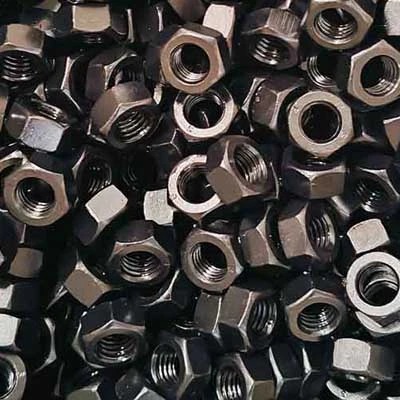
Nut material must be compatible. A194 2H is a familiar pairing with B7, but coating and thread series must also match. Both nuts should achieve adequate thread engagement, and the project may specify visible thread protrusion beyond the nut.
Lubrication strongly affects tightening. Flange assembly procedures may use torque, tensioning or other controlled methods. The lubricant and coating should be part of the procedure. Using an unapproved lubricant can produce excessive bolt stress at the same torque.
Threaded rod selection for supports and hangers depends on design load, unsupported length, buckling or tension behavior, thread size, material class, corrosion environment, connection hardware and installation code.
Many hanger rods work primarily in tension, but eccentricity, vibration and accidental side loading can introduce bending. Long slender rods may be vulnerable to damage during installation. Support spacing and seismic bracing must follow the system design.
Rod diameter should be based on engineering capacity and the permitted thread tensile area, not merely the hole in a bracket. Coupling nuts, beam clamps and channel hardware must have compatible threads and ratings. The weakest component controls the assembly.
Outdoor or wet service requires a corrosion strategy. Zinc-plated rod may be appropriate for dry indoor environments but inadequate for exposed outdoor installations. Hot-dip galvanized or stainless systems may be considered, with attention to cut ends and compatible hardware.
When rod is cut on site, deburr the end and restore corrosion protection as required. Do not force a damaged end through a nut because it can damage the nut thread and hide the problem until load is applied.
Stud bolt length must provide the required clamped stack, two nut heights, washers where specified and sufficient thread protrusion without creating interference or leaving incomplete engagement.
Length conventions vary by product specification. Some measurements include chamfered points, while other calculations use effective length. The purchase order should identify the standard and exact length definition. For a custom stud, use a controlled drawing.
Nut engagement is generally expected to be sufficient for the nut to develop its required proof load. A few visible threads beyond the nut are commonly used as an installation check, but the exact requirement belongs to the project procedure. Excessive protrusion wastes material and can interfere with insulation, guards or maintenance access.
For tap-end studs, engagement in the tapped body depends on body material and thread strength. A cast aluminum housing may require more engagement than a high-strength steel body. Blind-hole depth, bottom clearance and thread locking also matter.
Stud and rod material and coating selection controls mechanical strength, temperature capability, corrosion resistance, thread fit, friction and lifecycle maintenance.
| Option | Typical Applications | Advantages | Risks or Limits |
|---|---|---|---|
| Class 4.8/low-carbon steel | Light-duty supports and general fabrication | Cost-effective and easy to source | Lower strength and limited corrosion resistance without coating |
| Class 8.8 or 10.9 | Machinery, structural supports and higher-load assemblies | Higher mechanical capacity in compact sizes | Requires compatible nuts, controlled heat treatment and coating process |
| ASTM A193 B7 | Pressure flanges, valves, vessels and high-temperature equipment | Established alloy-steel bolting grade | Not a universal corrosion solution; documentation and nut pairing are critical |
| A2 stainless | General wet or clean environments | Good atmospheric corrosion resistance and clean appearance | Galling and limitations in chlorides or aggressive chemicals |
| A4 stainless | Marine-adjacent and more aggressive wet environments | Improved resistance in many chloride conditions | Higher cost; still subject to pitting, crevice corrosion and galling |
| Hot-dip galvanized steel | Outdoor supports and construction | Thick sacrificial zinc layer | Thread allowance, cut-end repair and compatible nuts required |
Electroplating high-strength steel can introduce hydrogen-related risk if the material, cleaning and baking process are not controlled. The acceptable coating route should be defined by the fastener standard and project requirements. A low-cost finish substitution can create a larger reliability risk than the value of the coating.
Stud bolt installation requires clean matching threads, correct nuts and washers, approved lubrication, uniform tightening sequence and verification of final joint condition.
Verify grade, size, heat/lot, coating and documentation before installation.
Inspect flange faces, gasket, holes and threads for damage or contamination.
Confirm the approved lubricant and apply it consistently to the specified surfaces.
Install studs with approximately balanced projection where the procedure requires it.
Run nuts by hand before using powered tools to detect pitch mismatch or damage.
Use the specified cross-pattern and incremental tightening passes.
Apply calibrated torque or tensioning equipment according to the approved procedure.
Record final values and inspect protrusion, nut seating and flange gap as required.
Studs should not be straightened, heated, welded or ground in the field unless an approved procedure permits it. Such modifications can change mechanical properties and destroy traceability.
Threaded rod installation requires clean cut ends, adequate engagement, aligned supports, compatible couplers and protection against loosening, corrosion and unintended bending.
Use the proper cutting method and support the rod to avoid bending. After cutting, remove burrs and test a nut by hand. If the rod is galvanized, repair the exposed end using the project-approved method. Maintain the product identity and grade after cutting.
Coupling nuts should engage each rod sufficiently and may need an inspection hole or center stop depending on the system. Locking methods can include jam nuts, prevailing-torque nuts, thread-locking compounds or mechanical retainers, but each method has temperature and service limitations.
Hangers should be plumb unless the design allows an angle. Side-loading a rod, clamp or insert can reduce capacity. After equipment startup, vibration-sensitive supports may require inspection and retightening according to the maintenance plan.
Common substitution errors occur when buyers replace specified stud bolts with commercial threaded rod, mix metric and inch threads, use the wrong nut grade, change coating or cut products without preserving traceability.
General threaded rod may lack the required alloy, heat treatment, mechanical tests, end condition and traceability. Visual similarity does not establish compliance with ASTM A193 or the equipment code.
Both are strength-related designations, but they belong to different standards and service frameworks. They are not direct substitutes without engineering review of chemistry, heat treatment, dimensions, temperature and testing.
A nut can thread onto a stud and still be mechanically inadequate. Nut grade, proof load, dimensions, coating allowance and thread tolerance must match.
Cutting a marked rod into pieces can separate each piece from the original identification. Critical projects need a method to transfer identity and maintain lot traceability.
Changing from plain to zinc-flake, galvanized or lubricated components changes friction and therefore torque-tension behavior. Installation values must be reviewed.
Inspection verifies material identity, diameter, pitch, length, straightness, thread acceptance, end condition, mechanical properties, coating, marking and lot traceability.
Dimensional inspection should use calibrated tools and thread gauges. A ring gauge checks external thread acceptance, while length and straightness require methods appropriate to product size. End chamfers should permit nut starting without reducing required length or damaging the first full thread.
Mechanical testing depends on the standard and may include tensile strength, yield or proof stress, elongation, reduction of area, hardness and impact testing. The report must identify the test method, size, lot and acceptance criteria.
Coating inspection may include thickness, appearance, adhesion, corrosion test and post-coating thread assembly. For stainless steel, positive material identification or chemistry may be required on critical orders. Passivation and surface contamination controls should match the purchase specification.
Total cost includes material, cutting, machining, heat treatment, coating, testing, documentation, installation labor, scrap risk, maintenance and the consequence of using an unsuitable product.
Threaded rod often has a lower unit cost and greater length flexibility. It can reduce inventory when installers cut multiple sizes from stock. However, field cutting adds labor, waste, end repair and traceability challenges.
A finished stud bolt costs more when it includes controlled material, heat treatment, precision length, prepared ends, testing and certificates. In critical service, those controls reduce installation uncertainty and compliance risk. The lowest per-kilogram quote may be more expensive if it lacks required tests or causes flange rework.
For recurring assemblies, compare landed cost per approved component, not raw weight. Include nuts, washers, packaging, documentation, inspection, freight and defect handling.
A complete stud bolt or threaded rod RFQ defines the product type, standard, material, grade, thread, length, ends, finish, mating hardware, quantity, testing, traceability and application.
| RFQ Field | Stud Bolt Example | Threaded Rod Example |
|---|---|---|
| Product | Fully threaded stud bolt | Continuous threaded rod |
| Standard/grade | ASTM A193/A193M Grade B7 | ISO 898-1 class 8.8 or project-defined rod grade |
| Thread | 1 in-8 UNC, class as specified | M16 × 2.0 |
| Length | Controlled finished length with point definition | 1 m stock length or 450 mm cut length |
| Ends | Chamfered both ends | Saw cut and deburred |
| Finish | Plain, approved coating or specified lubricant | Zinc plated, hot-dip galvanized or stainless |
| Mating parts | Two ASTM A194 2H heavy hex nuts | Nuts, washers and coupling nuts |
| Documents | MTC, heat/lot traceability and mechanical tests | Certificate and dimensional report as required |
Include order quantity per size, annual demand, packaging weight, label format, destination and third-party inspection. If the application is a flange, send flange class, temperature and bolting schedule. If the application is a support, send design load and environmental exposure.
A stud bolt or threaded rod supplier should demonstrate material control, thread capability, heat treatment, cutting and end preparation, coating, inspection, traceability and export packaging appropriate to the ordered grade.
Ask which products are manufactured in-house and which processes are outsourced. Review approved subcontractors for heat treatment and coating. Confirm that thread rolling or cutting, straightening and end preparation are controlled for the size range.
For A193 B7, review heat treatment, chemistry, tensile and hardness records. For high-strength metric rods, confirm property-class testing. For stainless, confirm grade identity and surface controls. For galvanized rod, confirm thread fit and cut-end handling.
Check packaging carefully. Long rods can bend if pallets are weak or unsupported. Finished studs can suffer thread damage if loose-packed. Protective caps, bundles, dividers, rust prevention and clear labels should match the shipping route.
Befast provides rods and studs as part of a broader fastener portfolio, enabling buyers to coordinate studs, threaded rods, nuts, washers, coatings and documentation through one technical RFQ.
The company states that it has more than two decades of fastener experience, a 6,000-ton monthly production capacity, 120 professionals and 35 advanced machines. For a specific order, confirm the applicable process route, size range, tests, certificate format and lead time.
Coordinated sourcing is valuable for flange kits and support assemblies because component mismatches are a frequent cause of delay. A stud can be paired with the required heavy hex nuts; a rod can be paired with nuts, washers or couplers using the same thread system and compatible finish.
Send a controlled specification or drawing whenever possible. Befast can then review missing technical fields, quote on a like-for-like basis and prepare samples or inspection documents according to the agreed order plan.
These FAQs provide concise answers to common stud bolt and threaded rod selection questions.
They can have similar geometry, but they are not automatically the same product. A fully threaded stud may be manufactured, cut, marked and tested as a finished fastener under a specific bolting standard. Threaded rod is often supplied as stock material. Verify grade, heat treatment, dimensions, ends, testing and traceability before substituting.
Only when the flange design and governing specification explicitly allow a threaded product that meets all required material, mechanical, dimensional and documentation requirements. Commercial threaded rod should not be assumed to comply with ASTM A193 or a pressure-equipment code. Use specified stud bolts for critical flanges unless engineering approves otherwise.
ASTM A193 Grade B7 is an alloy-steel bolting grade used in high-temperature or high-pressure service and other special-purpose applications. It is commonly supplied as stud bolts and paired with ASTM A194 Grade 2H nuts. Exact size, thread, heat treatment, coating, testing and service limits must follow the current standard and project specification.
The project or flange assembly procedure controls the requirement. A small amount of visible full thread beyond the nut is commonly used to confirm engagement, but the number of threads should not be guessed for a critical joint. Check stud length, nut height, washers and the approved installation specification.
It can be cut when the design permits, but the cut end must be deburred and corrosion protection restored using an approved method. Cutting can remove product identification and expose bare steel. Critical installations need a procedure for traceability, coating repair and inspection after cutting.
Provide the standard and revision, grade, diameter, thread series and class, finished length, end style, finish or lubricant, nut and washer requirements, quantity, tests, marking, traceability, packaging and destination. Include flange class, temperature, fluid environment or other service information when the application is critical.
Stud bolts and threaded rods share external threads but serve different purchasing and engineering roles. A stud bolt is normally a controlled finished fastener for a defined joint, while threaded rod is a flexible stock or cut-length component used in supports, hangers, anchoring and general fabrication.
The decision should be based on the governing code, load, temperature, environment, end configuration, grade, nut pairing, installation and documentation. Visual similarity is not evidence of interchangeability. This is especially important for ASTM A193 pressure bolting, high-strength metric classes and coated assemblies.
Befast can supply both product families with matching nuts and washers. A complete RFQ allows technical review before pricing and helps prevent the most common errors: wrong thread, wrong grade, insufficient length, incompatible coating and missing traceability.
These references provide authoritative background on alloy-steel, metric and stainless steel bolting.
ISO 898-1:2013 — Mechanical properties of carbon and alloy steel bolts, screws and studs
ISO 3506-1:2020 — Mechanical properties of corrosion-resistant stainless steel fasteners

 English