Search
Heavy hex nuts are used where a bolted joint needs a larger wrenching surface, greater thread engagement, robust bearing geometry or compatibility with a specified structural or pressure-service bolting system. They look similar to regular hex nuts, but treating them as an interchangeable “larger nut” can lead to incorrect dimensions, mismatched strength, coating interference or a joint that does not meet the governing standard.
This guide is designed for engineers, EPC contractors, steel fabricators, oil and gas buyers, industrial distributors and procurement teams. It explains how heavy hex nut standards are organized, how nut grade relates to bolt grade, why proof load matters, how coatings affect thread fit, and what a factory should verify before shipment.
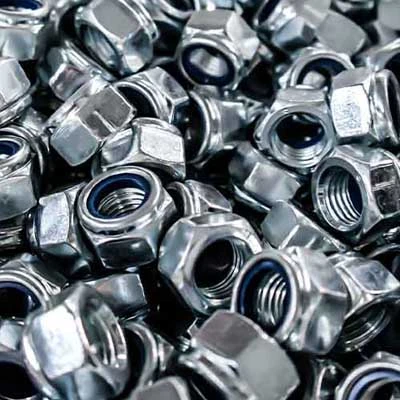
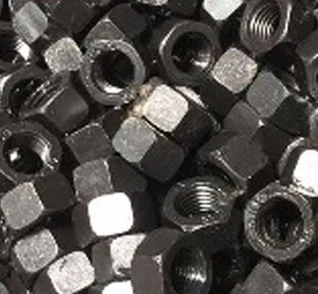
A heavy hex nut has a wider width across flats and generally a heavier profile than a regular hex nut of the same nominal thread size. It is commonly paired with high-strength structural bolts or ASTM A193-type bolting, depending on the project standard. The correct nut must match the bolt’s diameter, pitch, thread series, mechanical requirement, material, finish and service temperature.
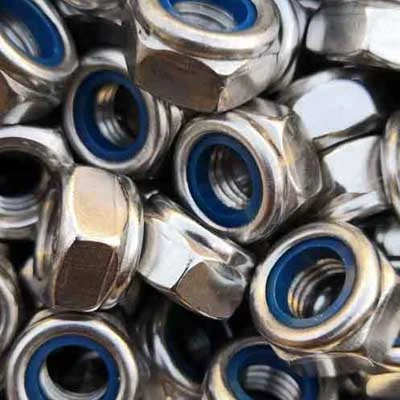
A heavy hex nut is a six-sided internally threaded fastener with enlarged wrenching and bearing dimensions intended for demanding structural, pressure-service and industrial bolted joints.
The larger geometry provides more material around the threaded hole and a broader bearing face than a regular hex nut in the same nominal size. This can support the proof-load requirements, wrench engagement and joint configurations defined by the applicable standard. The benefit is not a universal percentage increase in joint capacity; the actual capacity depends on nut grade, bolt grade, thread engagement, material, heat treatment and the standard used.
Heavy hex nuts are frequently seen in structural steel connections, anchor rods, flanged joints, bridges, heavy equipment, power generation, petrochemical systems and other installations where the fastener specification explicitly calls for them. They may be supplied in carbon steel, alloy steel or stainless steel, with plain, black, zinc-plated, hot-dip galvanized or other project-approved finishes.
Befast supplies heavy hex nuts for international B2B orders. A purchasing specification should identify the governing dimensional and material standards rather than relying on the product name alone.
Heavy hex nut geometry matters because width across flats, nut height, bearing-face diameter and thread engagement influence wrench access, proof-load performance, bearing pressure and compatibility with the bolt assembly.
A wider nut requires a larger wrench or socket. This can be beneficial for torque application and handling, but it also requires adequate clearance around the connection. Designers should check edge distances, recesses, counterbores, adjacent bolts and installation tools before substituting a heavy pattern for a regular pattern.
Nut height contributes to the number of engaged threads and the ability of the nut to develop the required proof load without thread stripping. Increasing height alone does not guarantee compliance because material strength, thread tolerance, hardness and heat treatment are equally important. A nonconforming tall nut is not equivalent to a tested nut of the specified grade.
The bearing face transfers clamp force into the washer or connected component. Surface flatness, perpendicularity and finish affect load distribution. For high-strength structural assemblies, the nut, bolt and washer are selected as a coordinated system. A soft or undersized washer can deform even when the nut itself meets requirements.
Heavy hex nut standards define dimensional series, thread systems, materials, mechanical properties, markings, testing and the bolting applications for which the nut is intended.
ASTM A194/A194M covers carbon steel, alloy steel and stainless steel nuts for bolts used in high-pressure or high-temperature service, or both. Grade 2H is one of the most recognized heavy hex nut grades and is commonly paired with ASTM A193 Grade B7 bolting where the project specification permits that combination.
The “2H” designation is not a dimensional standard by itself. The purchase order must also define dimensions, thread series, finish and any supplementary requirements. Buyers should specify the exact revision required by the project because standards are updated over time.
High-strength structural bolting in North American practice is commonly organized under ASTM F3125/F3125M for bolt grades and related assembly requirements. The selected nut grade and washer must be compatible with the specific bolt grade, coating and installation method. Legacy references to older bolt standards may appear in drawings, so procurement teams should confirm whether the project has adopted the consolidated standard or requires a legacy designation.
ISO 898-2 defines mechanical properties and property classes for carbon and alloy steel nuts, including classes 8, 10 and 12. ISO 4032 covers regular style 1 nuts, while ISO 4033 covers high style 2 nuts in metric coarse pitch sizes. A “high nut” in the ISO system and an “ASTM heavy hex nut” are not automatically dimensionally interchangeable.
ASME B18 dimensional standards are often specified for inch heavy hex nuts and related products. The exact document, edition and dimensional table must be identified on the purchase order. A supplier should not infer the required pattern solely from an ASTM material grade.
| Standard Family | Primary Function | Typical Use | Buyer Must Confirm |
|---|---|---|---|
| ASTM A194/A194M | Material and mechanical requirements for nuts used with pressure/high-temperature bolting | Flanges, pressure equipment, petrochemical and power applications | Grade, dimensions, thread, finish, marking, tests and revision |
| ASTM F3125/F3125M system | High-strength structural bolt and assembly requirements | Steel structures, bridges and structural connections | Exact bolt grade, compatible nut/washer, coating and installation method |
| ISO 898-2 | Mechanical property classes and tests for metric nuts | Metric industrial and machinery fasteners | Nut style, property class, diameter, pitch and service temperature |
| ISO 4033 | Dimensions for metric high nuts, style 2 | Metric assemblies needing a high nut pattern | Size range, product grade and mechanical standard |
| ASME B18 series | Inch dimensional geometry | North American industrial fasteners | Exact document and edition, material standard and finish |
Heavy hex nut grade selection is a system decision in which the nut proof load, bolt tensile capacity, thread geometry and service condition must be compatible.
A nut should generally be strong enough to allow the mating bolt to develop its intended capacity without premature internal-thread stripping. Standards use proof-load tests and specified property classes to verify this relationship. The number stamped on a metric nut is not interpreted in exactly the same way as the two-number property class on a metric bolt.
Under ISO 898-1, a class 8.8 bolt conventionally has 800 MPa nominal tensile strength and about 640 MPa nominal yield strength. Class 10.9 conventionally represents 1,000 MPa nominal tensile strength and about 900 MPa nominal yield strength. ISO 898-2 provides nut classes designed for compatibility with specified bolt classes within its scope. The supplier must verify the correct combination and test requirements for the size ordered.
In ASTM pressure-service bolting, A193 Grade B7 studs are often paired with A194 Grade 2H heavy hex nuts. This common pairing does not eliminate the need to review temperature, coating, thread series, lubrication, corrosion and project-specific requirements. Low-temperature, severe corrosion or sour-service applications may require a different material system.
For structural assemblies, a nut should not be selected independently from the heavy hex bolts and washers. Coating a bolt can require a compatible oversized internal thread in the nut, while the washer must have the hardness and dimensions required by the assembly standard.
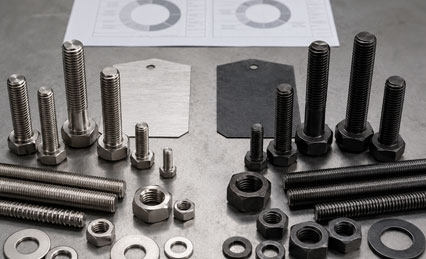
ASTM A194 Grade 2H heavy hex nuts are heat-treated carbon steel nuts widely used with alloy steel bolting in high-pressure and high-temperature service when specified by the engineering code.
Buyers frequently request “2H nuts” without enough detail. A complete order should state ASTM A194/A194M Grade 2H, the dimensional standard, diameter, threads per inch, thread series, finish, coating standard, marking, inspection level and certificate requirements. For example, a plain 2H nut and a hot-dip galvanized 2H nut of the same nominal size may require different internal-thread allowance and assembly controls.
Hardness is an important process-control and acceptance property, but it is not the only evidence of performance. Proof-load testing, thread inspection, dimensions, chemistry and heat-treatment records may also be required. The exact testing frequency and acceptance criteria should follow the ordered standard and any project supplements.
Marking should remain legible after finishing where required. Lot traceability should connect the package label and certificate to production and test records. A certificate that lists only “2H” without heat or lot identification may not satisfy critical-project documentation requirements.
Metric nut classes 8, 10 and 12 identify proof-load-based mechanical categories designed to mate with compatible metric bolts under the scope and conditions of ISO 898-2.
Metric buyers should distinguish between the bolt property class and nut property class. A bolt may be marked 8.8 or 10.9, while a full-height nut may be marked 8 or 10. The supplier should use the compatibility guidance in the current standard rather than matching numbers by appearance.
Thread pitch is equally important. An M20 coarse-thread nut is not compatible with an M20 fine-thread bolt. Fine pitch can provide different adjustment, tensile area and loosening behavior, but it also demands correct gauges and stricter purchasing communication. The RFQ should state the full thread callout, not just “M20.”
Service temperature also requires engineering review. ISO 898-2 states that nuts are tested in an ambient range of 10°C to 35°C and discusses intended use across broader temperature ranges subject to material behavior. For temperatures outside normal service, consult the project engineer and materials specialist rather than assuming the room-temperature class remains fully applicable.
Heavy hex nuts differ from regular hex nuts in wrenching size, height or pattern, bearing area, typical standards and their use in higher-demand bolting systems.
| Comparison Point | Heavy Hex Nut | Regular Hex Nut | Selection Implication |
|---|---|---|---|
| Width across flats | Generally larger for the same nominal thread | Smaller standard wrenching size | Check tool and surrounding clearance |
| Nut profile | Heavier pattern and often greater thread engagement | General-purpose style 1 geometry | Do not substitute without dimensional review |
| Typical systems | Structural, pressure service, anchor rods and heavy equipment | General machinery and standard assemblies | Follow drawing and governing standard |
| Material/grade examples | ASTM A194 2H, compatible structural grades, metric high nut classes | Metric classes and general ASTM/SAE nut grades | Grade name alone does not define dimensions |
| Washer pairing | Often used with specified hardened or structural washers | May use standard washers depending on joint | Verify the complete assembly |
| Cost and weight | More material and potentially more process control | Usually lower material mass | Choose by requirement, not appearance |
A heavy hex nut should not be used as an informal upgrade unless the joint has enough space and the bolt, washer, bearing surface and installation procedure remain compatible. Conversely, replacing a specified heavy hex nut with a regular nut can reduce wrenching engagement and violate the approved assembly standard.
Heavy hex nut material selection balances proof-load capacity, toughness, corrosion resistance, temperature performance, coating behavior, availability and total installed cost.
Carbon and alloy steels are common for structural and high-strength service because heat treatment can provide controlled mechanical properties. Plain or black finishes offer limited atmospheric protection, while zinc, hot-dip galvanizing or other coatings may be specified for corrosion control. High-strength material and electroplating require careful hydrogen-embrittlement risk management where applicable.
Stainless steel heavy hex nuts are selected for corrosion resistance in food equipment, water treatment, marine-adjacent, chemical and architectural environments. Stainless grade must be matched to the actual environment. A4-type stainless generally offers improved resistance in many chloride conditions compared with A2-type, but neither is universally immune to pitting, crevice corrosion, stress corrosion or galling.
Coating changes more than color. It affects thread fit, friction, installation torque, corrosion resistance and sometimes dimensional acceptance. Hot-dip galvanized nuts are commonly over-tapped to mate with coated external threads. The bolt and nut should be supplied or verified as a compatible coated assembly.
| Finish | Typical Benefit | Key Control Point | Common Sourcing Error |
|---|---|---|---|
| Plain/black | No thick coating; suitable for controlled environments or subsequent treatment | Rust prevention during storage and transport | Assuming black appearance provides outdoor protection |
| Zinc plated | Thin protective finish and clean appearance | Thickness, passivation, hydrogen controls and friction | Comparing price without coating specification |
| Hot-dip galvanized | Thicker zinc protection for outdoor exposure | Thread allowance, coating standard and mating assembly | Using a standard-tapped nut on a heavily coated bolt |
| Mechanical zinc or zinc-flake | Project-specific corrosion and friction performance | Approved process, topcoat, coefficient window and test | Using trade names without a measurable requirement |
| Stainless/passivated | Corrosion-resistant base material and clean surface | Grade, surface contamination, passivation and galling control | Assuming all stainless grades perform the same |
Thread fit and assembly friction determine whether a heavy hex nut can run freely, develop clamp load and be installed without seizure after coating.
External and internal threads are manufactured to defined tolerances. A thick coating on the bolt consumes clearance. If the nut is not prepared for that coating system, it may bind or remove coating during assembly. For hot-dip galvanized systems, the specified allowance is normally provided by the appropriate thread practice, often through over-tapping the nut after galvanizing or another approved route.
Friction has a major effect on torque. Two visually identical nuts with different coatings or lubricants can produce different bolt tension at the same torque. This is why project-approved lubricant, coating and installation procedure should be controlled together. Do not reuse a torque value from plain fasteners for lubricated coated fasteners without engineering validation.
Stainless steel assemblies have a different concern: galling. Slower installation, smooth threads, compatible materials and approved anti-seize can reduce risk. Any lubricant changes friction and must be included in the torque or tension method.
A heavy hex nut should be paired with a washer whose dimensions, hardness, finish and standard support the intended bolt assembly and bearing surface.
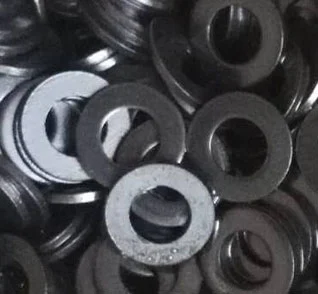
In structural joints, washers can protect connected material, bridge holes, provide a suitable bearing surface and support installation requirements. The term “structural washer” indicates a product category with more demanding geometry and hardness than a general low-carbon flat washer. The washer requirement depends on hole type, bolt grade, connected material and installation method.
Befast supplies structural washers as a related category. Before ordering, confirm the washer standard, inside diameter, outside diameter, thickness, hardness, finish and whether it is required under the nut, bolt head or both.
A washer that is too soft can dish or embed under preload. A washer with excessive clearance can reduce bearing support. A washer that is too large may interfere with adjacent welds or edges. The complete stack-up should be checked on the assembly drawing.
Heavy hex nut assembly failures commonly involve thread stripping, bolt fracture, insufficient preload, loosening, coating interference, galling, corrosion, washer deformation or incorrect grade pairing.
Internal or external threads can strip when the nut is too weak, thread engagement is insufficient, threads are damaged, pitch is mismatched or the assembly is overloaded. Proof-load and thread-gauge verification reduce this risk, but joint design remains essential.
Low clamp load can result from under-tightening, high friction, poor bearing surfaces, joint relaxation or a wrong installation method. A large nut does not compensate for an uncontrolled torque process.
Excessive torque can yield the bolt, strip threads, crush connected material or damage coating. Torque tools should be calibrated, and the specified procedure should account for lubrication and finish.
Improper heat treatment, material defects or process-related hydrogen can contribute to brittle failure in susceptible high-strength products. Supplier process controls and required testing are critical.
Water traps, incompatible metals, chemical exposure and coating damage can cause corrosion. Stainless threads may seize by galling even when corrosion is not present. Material, coating and assembly procedure should be treated as one system.
Heavy hex nut quality control verifies identity, dimensions, thread fit, chemistry, heat treatment, hardness, proof load, finish, marking and traceability according to the ordered standard.
A typical inspection plan may include width across flats, width across corners, nut height, bearing-face condition, thread gauges, surface defects and marking. Mechanical testing may include hardness and proof load, with sampling and acceptance based on the governing specification.
For ASTM-grade orders, material heat and production lot traceability should connect raw material, processing and final test reports. For coated products, verify coating thickness, appearance, adhesion where required, corrosion test requirement and thread assembly after finishing.
Buyers should distinguish a material certificate from a complete inspection report. A material certificate may show chemistry and mechanical values, while an inspection report may include finished dimensions, gauges and coating data. Define both before quotation.
A heavy hex nuts factory audit should examine process capability, approved materials, forming and machining controls, heat treatment, threading, coating, inspection, calibration, traceability and packaging.
Start with product scope. Ask which sizes, grades and standards are produced regularly and which are outsourced. Review process flow from raw material to shipment. Identify critical or special processes and the controls used for approved subcontractors.
Review calibration records for thread gauges, micrometers, hardness testers and proof-load equipment. Sample records should show the instrument, calibration status, lot, operator, result and disposition. The factory should have a clear method for isolating nonconforming material.
For high-strength nuts, review heat-treatment lot control and hardness uniformity. For coated nuts, review thread allowance, post-coating gauges, friction requirements and corrosion tests. For export orders, check packaging strength, label accuracy and moisture control.
According to chinbefast.com, Befast states a monthly capacity of 6,000 tons, a team of 120 professionals and 35 advanced machines. These figures indicate scale but should be supplemented by product-specific capacity, lead time, process route and inspection evidence during supplier qualification.
A heavy hex nut RFQ should identify the complete standard, grade, thread, dimensions, finish, bolt pairing, quantity, testing, marking, packaging and service conditions.
Material and mechanical standard, including grade and revision.
Dimensional standard and heavy pattern/style.
Nominal diameter, thread series and pitch.
Right-hand or special thread direction if applicable.
Plain, zinc, hot-dip galvanized, zinc-flake, stainless or other finish.
Mating bolt or stud grade, coating and thread condition.
Washer specification and assembly requirement.
Required hardness, proof load, chemistry, dimensions and coating tests.
Marking and traceability requirements.
MTC, inspection report, third-party inspection or PPAP-type documents if required.
Quantity per size, annual usage, packaging and destination.
Service temperature, corrosion environment and applicable project code.
Price comparisons should normalize every field. A plain class 8 metric high nut, an A194 2H heavy hex nut and a galvanized structural nut are different products even when nominal diameter is similar.
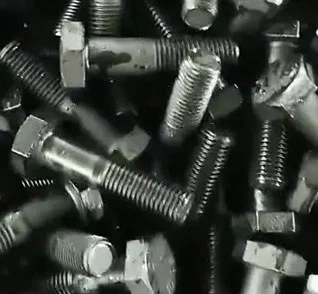
Befast supports industrial buyers by supplying heavy hex nuts together with compatible bolts, studs and washers across carbon steel, alloy steel and stainless steel product families.
The ability to coordinate multiple assembly components can reduce thread, finish and packaging mismatches. Buyers can submit the bolt or stud specification and request the matching nut and washer system. For repeat business, an approved drawing, inspection plan and packaging specification can be maintained as controlled order information.
Befast’s published company profile emphasizes more than two decades of fastener experience, ISO-certified facilities and international supply. Customers should request current certificates, product-specific inspection capability and sample documents that match the intended order.
To obtain an accurate quotation, send the full standard, size, grade, thread, finish, quantity, application and destination rather than only “heavy hex nut price.” This allows the manufacturer to evaluate raw material, heat treatment, coating, tests and packaging before committing to cost and lead time.
These FAQs address the most common technical and purchasing questions about heavy hex nuts.
A heavy hex nut has a larger wrenching size and heavier geometry than a regular hex nut of the same nominal thread. It is commonly used in structural, anchor-rod and pressure-service bolting systems. The two styles are not automatically interchangeable because dimensions, proof load, material grade and assembly standards can differ.
ASTM A194 Grade 2H nuts are commonly paired with ASTM A193 Grade B7 bolting in high-pressure or high-temperature service, but the project engineer and governing code must confirm the combination. Thread series, coating, temperature, corrosion, lubrication and dimensions must also match. Do not select the pairing solely from a general catalog.
ISO systems provide compatibility guidance between nut classes and bolt property classes, and a class 10 nut is commonly associated with compatible high-strength metric bolts within the standard’s scope. However, diameter, pitch, nut style, finish, temperature and the current standard must be checked. A marking match is not a substitute for specification review.
Hot-dip galvanizing adds significant coating thickness to external threads, so the nut normally requires an approved thread allowance or over-tapping practice to assemble correctly. The exact method must follow the coating and fastener standard. Bolt and nut should be supplied or verified as a compatible coated system.
No. Heavy geometry supports demanding specifications, but actual strength depends on material, property class, heat treatment, proof-load compliance and thread quality. A low-grade heavy nut is not automatically stronger than a high-grade regular nut. Compare the complete standard and test requirements, not only outside dimensions.
Depending on the project, documents may include a material test certificate, chemistry and mechanical results, heat-treatment record, hardness and proof-load test, dimensional report, thread-gauge result, coating certificate, corrosion test, marking record and packing list. State documentation requirements in the RFQ because they affect production planning and price.
Heavy hex nuts are engineered components within a bolting system, not simply oversized general-purpose nuts. Correct selection begins with the governing standard and continues through thread, grade, bolt pairing, washer, material, coating, service environment, installation and inspection.
ASTM A194 Grade 2H, structural nut systems and ISO metric high nuts serve different specification frameworks. Buyers should avoid mixing dimensional and mechanical designations without review. Coated and stainless assemblies also require friction, thread-fit and galling controls.
Befast can quote heavy hex nuts with related bolts, studs and structural washers for bulk international supply. A complete RFQ and agreed inspection plan provide the best foundation for consistent quality, accurate pricing and reliable repeat orders.
These standards provide authoritative background for nut dimensions, mechanical properties and pressure-service grades.
ISO 898-2:2022 — Mechanical properties of carbon and alloy steel nuts
ASTM A194/A194M — Nuts for high-pressure or high-temperature service

 English