Search
In 2026, the dominant trend in mechanical engineering and industrial equipment design is miniaturization and integration — machines are becoming smaller, more modular, and more densely packed with functional components, while the spaces available for fasteners, tools, and maintenance access are shrinking correspondingly. Robotics systems, automation modules, CNC fixtures, precision tooling, electronics equipment, medical devices, automotive subassemblies, and compact industrial machines all share the same design challenge: how to achieve strong, reliable fastening in spaces where traditional external hex bolts simply cannot be installed, tightened, or maintained without interfering with adjacent components, moving parts, or the clean surface profiles that modern equipment design demands.
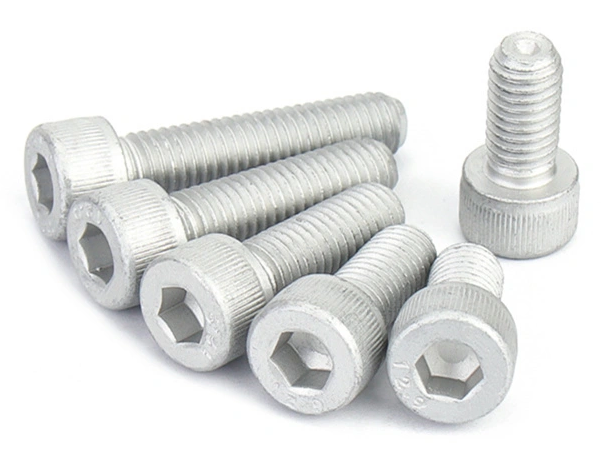
Allen bolts — also known as socket head cap screws, hex socket bolts, or internal drive fasteners — address this challenge through a design principle that is elegantly simple and commercially powerful: by moving the drive interface from the outside of the bolt head to an internal hexagonal socket, the fastener eliminates the side clearance requirement that external hex bolts impose, enables vertical tool access in spaces where lateral wrench movement is impossible, and allows the bolt head to be installed in a counterbored recess so that it sits flush with or below the surrounding surface. The result is a fastener that delivers strong clamping force and high torque transfer in the compact, recessed, and precision-critical locations where external hex bolts cannot function effectively.
Befast positions its Allen bolts as precision, secure fastening products for industrial strength, machinery assembly, equipment assembly, and consistent performance — with high-strength hexagon socket Allen screws available in grades 8.8, 10.9, and 12.9, as well as stainless steel hexagon socket Allen screws for corrosion-sensitive applications. This guide covers the complete picture for mechanical designers, procurement engineers, and equipment manufacturers: why compact machinery cannot always use external hex bolts, what Allen bolts and socket head cap screws are and how they differ from other fastener types, how internal drive design and counterboring save space and improve safety, how to select the right Allen bolt specification for specific machinery applications, and what installation and maintenance practices protect fastener performance over the equipment's service life.
The commercial case for specifying Allen bolts in compact machinery applications starts with a clear understanding of the specific problems that external hex bolts create in dense, integrated, and precision-critical equipment designs — and why these problems have commercial consequences that extend beyond the fastener itself.
External hex bolts require lateral clearance around the bolt head for wrench or socket access — clearance that may simply not exist in the dense component layouts of modern compact machinery. A standard hex bolt installed in a narrow cavity, close to a wall, rib, rail, or adjacent component may be impossible to tighten with a standard wrench because there is insufficient space to swing the wrench through the arc required for each tightening increment. In automated assembly environments where torque tools must access fasteners from a fixed direction, the lateral clearance requirement of external hex bolts can make automated fastening impossible in locations where Allen bolts with vertical hex key access would work without difficulty.
The head protrusion of external hex bolts creates a second category of problems in compact machinery. A bolt head that protrudes above the surrounding surface creates a snagging hazard for moving parts, cables, hoses, and operators in automation and conveyor systems. It disrupts the clean, streamlined surface profiles that modern equipment design requires for both aesthetic and functional reasons. And it creates impact exposure for the bolt head that can damage the fastener or the surrounding structure in applications where the equipment surface is subject to contact or vibration.
For equipment manufacturers, specifying the wrong fastener type for a compact assembly creates consequences that extend through the entire product lifecycle. Assembly difficulty increases production time and labor cost. Maintenance access problems increase service time and cost for field technicians. Safety hazards from protruding bolt heads create liability risk and may require design changes after production has begun. And the visual quality of the finished equipment — increasingly important for premium machinery brands — is compromised by exposed, protruding hardware that communicates a lack of design attention.
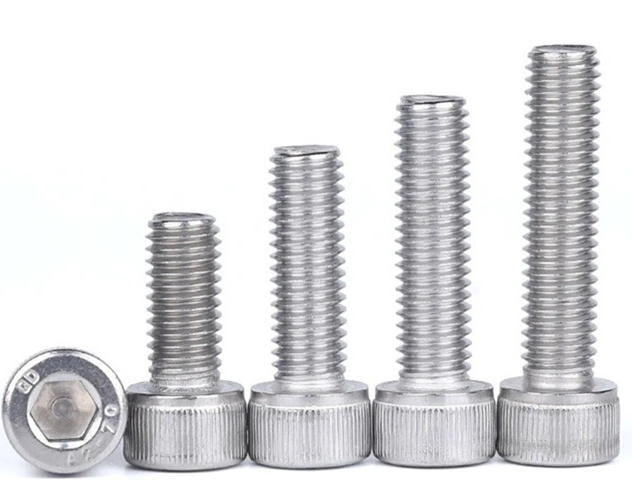
Understanding what Allen bolts are — and how the different types of socket head cap screws and hex socket bolts address different combinations of space, strength, and surface profile requirements — is essential for designers and procurement teams selecting fasteners for compact machinery applications.
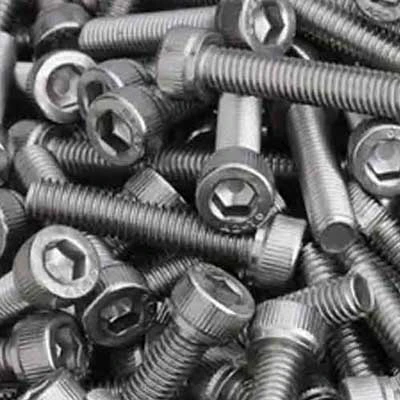
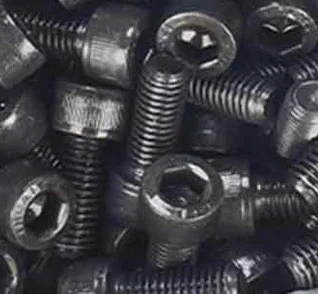
Allen bolts are fasteners with an internal hexagonal socket drive — the user inserts an Allen key or hex bit into the recessed socket in the bolt head and applies torque from directly above the fastener rather than from the sides. This internal drive design is the fundamental feature that makes Allen bolts suitable for compact machinery applications where external hex bolts cannot be installed or maintained effectively. Befast describes its Allen screw bolts and hex socket bolts as reliable, easy to install, and suitable for machinery and equipment assembly — with high-strength options in grades 8.8, 10.9, and 12.9 for load-bearing applications.
| Allen Bolt Type | Primary Application | Space-Saving Mechanism |
|---|---|---|
| Socket head cap screws | Precision machinery, automation, tooling, CNC fixtures | Compact cylindrical head fits in counterbored recess |
| Low head socket screws | Ultra-low clearance assemblies | Reduced head height for minimum vertical clearance |
| Button head socket screws | Visible surfaces and smooth profiles | Rounded, low-profile head reduces snagging risk |
| Countersunk socket screws | Flush panels and surface-critical assemblies | Head sits completely level with the surrounding surface |
| Stainless steel Allen bolts | Corrosive, outdoor, or food-grade environments | Corrosion resistance without sacrificing internal drive advantage |
| High-strength Allen bolts | Load-bearing machinery joints | Grade 10.9 or 12.9 strength in compact head format |
The technical mechanism by which Allen bolt internal drive design and counterbored installation combine to solve the space, access, and safety problems of compact machinery — and why this combination is more powerful than either feature alone — is the core engineering knowledge that designers need to specify Allen bolts correctly for demanding compact applications.
The key engineering advantage of the internal hex socket is that it moves the torque application interface from the periphery of the bolt head to the center — allowing the tool to engage the fastener from directly above rather than from the side. This eliminates the lateral clearance requirement that external hex bolts impose, because the hex key or hex bit needs only vertical access to the socket rather than the arc of movement that a wrench requires around an external hex head.
In practice, this means that Allen bolts can be installed in locations where the surrounding structure comes within millimeters of the bolt head — close to walls, ribs, rails, adjacent components, or the edges of machine frames — without any loss of tightening capability. In automated assembly systems, vertical hex bit access allows robotic or pneumatic fastening tools to reach fasteners in locations that would be inaccessible to side-entry tools. And in maintenance situations where access is restricted to a single direction, the vertical access of an Allen key provides tightening capability that a wrench cannot.
Befast states that its Allen head bolts offer superior torque transfer compared with standard screws, and notes that Allen bolts use a hexagonal socket head for a flush finish and are used where space is tight — confirming the core design advantage that makes Allen bolts the preferred choice for compact machinery applications.
Counterboring is the process of machining a cylindrical recess in the part so that the Allen bolt head can sit below or flush with the surrounding surface — completely eliminating the head protrusion that creates snagging hazards, surface interference, and aesthetic problems in compact machinery. Socket head cap screws are particularly well suited for counterbored installation because their compact cylindrical heads fit neatly inside the cylindrical counterbore recess, creating a clean, flush surface with no exposed hardware.
| Design Requirement | How Counterbored Allen Bolts Deliver |
|---|---|
| Flush surface profile | Bolt head sits inside counterbore — no protrusion above surface |
| Reduced snagging hazard | No exposed hex head on moving or operator-contact surfaces |
| Compact assembly density | Smaller clearance envelope around each fastener location |
| Protected bolt head | Recessed head is less exposed to impact, contamination, and damage |
| Premium equipment appearance | Clean, professional surface with no visible hardware protrusion |
| Moving part clearance | Flush surface eliminates interference with adjacent moving components |
The combination of internal drive access and counterbored installation creates a fastening solution that is simultaneously more compact, safer, and more aesthetically refined than any external hex bolt configuration can achieve. The internal drive allows the fastener to be tightened without lateral clearance, and the counterbore allows the head to be recessed without sacrificing tightening access — because the hex key can reach the socket through the counterbore from directly above. This combination is the reason that socket head cap screws have become the standard fastener for precision machinery, robotics, CNC fixtures, and compact industrial equipment where space, safety, and surface quality all matter.
The selection between Allen bolts and external hex bolts is not a universal preference question — it is an application-specific engineering decision that depends on the space constraints, access conditions, surface profile requirements, and maintenance environment of the specific assembly. Understanding where each fastener type delivers superior value is the practical knowledge that designers and procurement teams need to make correct fastener specifications.
| Evaluation Factor | Allen Bolts / Socket Head Cap Screws | External Hex Bolts |
|---|---|---|
| Drive type | Internal hex socket — tool engages from above | External hex head — tool engages from the side |
| Side clearance requirement | Minimal — only vertical access needed | Significant — wrench arc clearance required |
| Counterbored installation | Excellent — cylindrical head fits neatly in recess | Not suitable — hex head shape does not fit cylindrical counterbore |
| Surface profile | Flush or recessed when counterbored | Protrudes above surface in standard installation |
| Compact machinery fit | Strong advantage in dense, integrated designs | Better for open-access assemblies with adequate wrench clearance |
| Safety in automation | Reduced snagging when recessed | Exposed head may interfere with moving parts |
| Torque transfer | High — internal socket provides strong engagement | High — external hex provides good wrench engagement |
| Maintenance access | Excellent in narrow vertical access zones | Good when lateral access is available |
| Typical applications | Robotics, CNC fixtures, precision tooling, compact equipment | General construction, structural joints, heavy open assemblies |
| Tool requirement | Allen key or hex bit | Wrench, socket, or spanner |
Allen bolts are the correct fastener specification when: the installation location has insufficient lateral clearance for wrench access, the design requires flush or recessed fastener heads for surface profile, safety, or aesthetic reasons, the assembly is in a compact or enclosed equipment frame where protruding hardware creates interference or snagging risk, the application requires high torque transfer in a small head footprint, or the equipment is in a precision machinery category where clean, professional appearance is a brand requirement.
External hex bolts remain the practical choice when: there is adequate wrench clearance around the bolt head, the application requires frequent field service with common tools that may not include Allen keys, the assembly is a large structural joint where head protrusion is not a design concern, or cost and general availability are the primary procurement criteria and the space constraints of compact machinery do not apply.
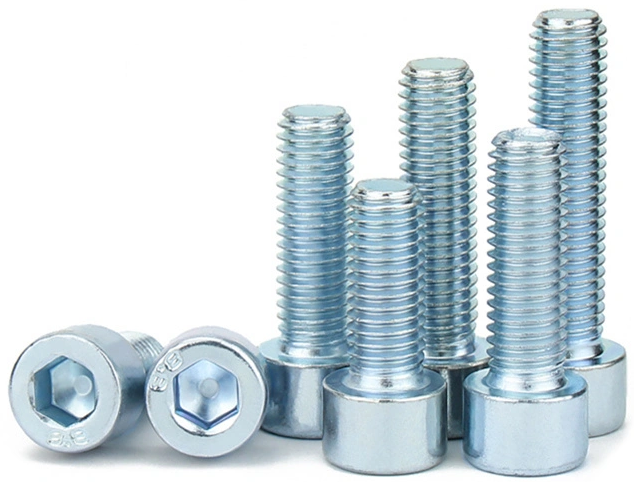
Selecting and procuring the right Allen bolt specification for a compact machinery application requires systematic evaluation of both technical requirements and supplier capability — and careful installation and maintenance practices that protect fastener performance over the equipment's service life.
Before placing an Allen bolt order, confirm the following:
Confirm the bolt standard and head type — socket head cap screw, low head, button head, or countersunk — based on the specific space, surface profile, and torque requirements of the application
Confirm the diameter and length — verify that the bolt length provides adequate thread engagement in the tapped hole or nut while fitting within the counterbore depth and assembly stack
Confirm the thread pitch — metric or unified thread, and the specific pitch for the diameter — and verify compatibility with the tapped hole or nut specification
Confirm the strength grade — 8.8, 10.9, or 12.9 for alloy steel, or A2/A4 for stainless steel — based on the clamping force and torque requirements of the joint
Confirm the material requirement — carbon steel, alloy steel, or stainless steel — based on the corrosion environment, temperature, and strength requirements of the application
Confirm the surface finish or coating requirement — plain, black oxide, zinc plated, or other — based on the corrosion exposure and aesthetic requirements
Confirm the counterbore dimensions — diameter and depth — and verify that the specified head type fits correctly in the counterbore with the required clearance
Confirm the socket size — verify that the correct Allen key or hex bit size is available for the assembly and maintenance tools used in the production and service environment
Confirm the torque requirement — specify the installation torque for the bolt size and grade, and verify that the assembly process can apply the specified torque consistently
Confirm the quantity by size and any packaging, certificate, or traceability requirements for the order
Use the correct Allen key or hex bit size for each bolt — an undersized or worn tool will round the socket, making the bolt impossible to tighten or remove without damage
Avoid worn or damaged Allen keys — a worn key that does not fully engage the socket will slip under torque, rounding the socket and potentially stripping the drive
Apply the specified installation torque — under-tightening reduces clamping force and increases vibration loosening risk, while over-tightening can strip threads or yield the bolt
Use thread locking compound or washers where the design requires resistance to vibration loosening — Allen bolts in vibrating machinery applications may require additional anti-loosening measures
Ensure counterbore depth matches the bolt head height — a counterbore that is too shallow will not allow the head to sit flush, while one that is too deep may reduce the effective thread engagement
Keep socket recesses free from dirt, paint, debris, and corrosion — contaminated sockets prevent full tool engagement and reduce the effective torque that can be applied
Inspect for corrosion in outdoor, marine, or chemical environments — replace corroded bolts before socket damage makes removal difficult
Replace bolts with damaged or rounded sockets immediately — a bolt with a damaged socket cannot be reliably tightened or removed and creates a maintenance risk
Keep spare sizes organized and labeled for maintenance teams — having the correct replacement bolts immediately available reduces maintenance downtime
In 2026, the miniaturization and integration trend in mechanical engineering has made Allen bolts — socket head cap screws, hex socket bolts, and internal drive fasteners — the standard fastener choice for compact machinery, precision equipment, robotics, automation, and any application where space constraints, surface profile requirements, and safety considerations make external hex bolts impractical. The combination of internal hex drive access that eliminates lateral clearance requirements and counterbored installation that creates flush, recessed surfaces is a fastening solution that delivers strong clamping force, high torque transfer, and clean equipment appearance in the compact, integrated designs that modern machinery demands.
Befast supplies Allen bolts designed for industrial strength, endurance, corrosion resistance, high torque transfer, and dependable performance — with high-strength hexagon socket Allen screws in grades 8.8, 10.9, and 12.9, stainless steel options, and a broad range of head types for compact machinery, precision tooling, automation equipment, and industrial manufacturing applications.
Contact Befast today to discuss your Allen bolt size, grade, material, head type, coating, counterbore dimensions, bulk quantity, packaging requirements, and delivery schedule. The Befast team can help identify the right socket head cap screw specification for your compact machinery application and provide the technical support and supply reliability that precision equipment manufacturing requires.
Q1: What are Allen bolts and why are they called socket head cap screws?
Allen bolts are fasteners with an internal hexagonal socket drive that is tightened using an Allen key or hex bit inserted into the recessed socket. They are called socket head cap screws because the drive interface is a socket recessed into the head of the fastener — as opposed to external hex bolts where the drive interface is the external hex shape of the head. The terms Allen bolt, socket head cap screw, hex socket bolt, and internal drive fastener are often used interchangeably in industrial contexts.
Q2: Why are Allen bolts better than hex bolts for compact machinery?
Allen bolts require only vertical tool access to the internal socket, eliminating the lateral clearance requirement that external hex bolts impose for wrench access. They can be installed in counterbored holes so the head sits flush with or below the surrounding surface, eliminating head protrusion. This combination of minimal clearance requirement and flush installation capability makes Allen bolts significantly more suitable than external hex bolts for compact, integrated machinery designs where space is limited and surface profile matters.
Q3: What is counterboring and why is it important for Allen bolt installation?
Counterboring is the process of machining a cylindrical recess in the part so that the Allen bolt head can sit below or flush with the surrounding surface. It is important for Allen bolt installation because it eliminates head protrusion — removing snagging hazards, surface interference with moving parts, and aesthetic problems from exposed hardware. Socket head cap screws are particularly well suited for counterbored installation because their compact cylindrical heads fit neatly inside the cylindrical counterbore recess.
Q4: What strength grades are available for Allen bolts?
Allen bolts are commonly available in grades 8.8, 10.9, and 12.9 for alloy steel — with grade 12.9 providing the highest tensile strength for the most demanding load-bearing applications. Stainless steel Allen bolts are available in A2 and A4 grades for corrosion-sensitive applications. Befast offers high-strength hexagon socket Allen screws in grades 8.8, 10.9, and 12.9, as well as stainless steel hexagon socket Allen screws.
Q5: When should I choose hex bolts instead of Allen bolts?
External hex bolts are the better choice when there is adequate lateral clearance for wrench access, the application requires frequent field service with common tools that may not include Allen keys, the assembly is a large structural joint where head protrusion is not a design concern, or cost and general availability are the primary procurement criteria and the space constraints of compact machinery do not apply.
Q6: What materials are available for Allen bolts and how do I choose?
Allen bolts are available in carbon steel, alloy steel, and stainless steel. Alloy steel in grades 8.8, 10.9, or 12.9 is the standard choice for high-strength machinery applications. Stainless steel is specified for corrosive environments, outdoor applications, food-grade equipment, and marine hardware where corrosion resistance is required. The material selection should be based on the strength requirement, corrosion exposure, temperature range, and any regulatory requirements of the specific application.
Q7: What should I provide when ordering Allen bolts in bulk?
Provide the bolt standard or drawing, diameter and length, thread pitch, strength grade, material requirement, head type, surface finish or coating, counterbore dimensions if applicable, socket size, quantity by size, torque requirement, corrosion environment, packaging requirements, certificate or traceability requirements, and delivery schedule. This information allows the supplier to confirm the correct specification and provide an accurate technical and commercial proposal.

 English