Search
In 2026, the expectations that end users bring to product assembly, adjustment, and maintenance have shifted fundamentally. Whether the product is modular exhibition furniture, an adjustable industrial fixture, a temporary guardrail system, a lighting bracket, a consumer equipment kit, or a reconfigurable machinery component, users increasingly expect hardware that allows them to assemble, adjust, and disassemble without searching for tools, without specialized knowledge, and without the frustration that traditional wrench-dependent fasteners create in field assembly and maintenance situations. The plug-and-play, quick-adjust, tool-free assembly expectation has moved from a consumer convenience preference to a B2B product design requirement — and the fasteners that enable this experience are wing nuts and butterfly nuts.
Wing nuts — also known as butterfly nuts, hand-tightened nuts, and tool-less fasteners — address the tool-free assembly requirement through a design principle that is mechanically simple and commercially powerful: two wing-like projections on the sides of the nut provide the grip area and leverage that allow users to tighten and loosen the fastener by hand, without any tool, in the time it takes to rotate the wings a few turns. For product designers, equipment manufacturers, and procurement teams sourcing wing bolt manufacturers for modular product applications, wing nuts represent a fastener category that directly affects user experience, assembly speed, maintenance efficiency, and the overall perception of product quality and convenience.
Befast positions its wing bolts and related butterfly fasteners for quick, easy hand adjustment, secure holding, corrosion resistance, durability, and flexible use in assemblies and fixtures — providing the wing nut and wing bolt supply capability that modular product manufacturers need for tool-free assembly applications. This guide covers the complete picture for B2B product designers and procurement teams: why traditional tool-based fasteners slow down modular assembly, what wing nuts and butterfly nuts are and how they differ from other hand-tightened fastener types, how the two-wing design creates hand-tightening leverage, how to select the right wing nut specification for specific modular product applications, and what installation and maintenance practices protect wing nut performance over the product's service life.
The commercial case for specifying wing nuts in modular product applications starts with a clear understanding of the specific problems that traditional hex nuts and tool-dependent fasteners create — and why these problems have commercial consequences that extend from the assembly line to the end user's experience.
Traditional hex nuts and bolts require a wrench, socket, or screwdriver for installation and adjustment — a requirement that creates friction at every point in the product lifecycle where the fastener must be engaged. In field assembly of modular furniture, exhibition systems, or temporary structures, the need for tools means that assemblers must carry and manage additional equipment, that assembly time increases with every fastener that requires tool access, and that the risk of stripped heads and damaged threads increases with every adjustment cycle. For consumer products where the end user is assembling the product at home or in an office, tool-dependent fasteners create the frustration that generates negative reviews, after-sales complaints, and returns.
The maintenance efficiency problem is equally significant for industrial and commercial applications. When a maintenance technician needs to adjust, reconfigure, or replace a component in a modular fixture, guard, or equipment assembly, every fastener that requires a specific wrench size adds time to the maintenance task. In environments where multiple fastener sizes are used across a product range, the tool management overhead — finding the right wrench, ensuring it is available at the maintenance location, and managing the risk of using the wrong size — creates inefficiency that compounds across the maintenance lifecycle of the product.
For B2B product designers, the fastener specification is not a detail that can be left to the end of the design process — it is a user experience decision that affects how the product is perceived, how quickly it can be assembled and reconfigured, and how much after-sales support it requires. A modular product that can be assembled and adjusted without tools communicates design intelligence and user consideration. A product that requires a specific wrench for every adjustment communicates the opposite — and in a market where competing products are increasingly designed for tool-free operation, tool-dependent fasteners create a competitive disadvantage that is visible to every user who assembles or maintains the product.
Understanding what wing nuts are — and how they differ from other hand-tightened and quick-release fastener types in ways that matter for specific modular product applications — is essential for designers and procurement teams selecting tool-less fasteners for their product range.
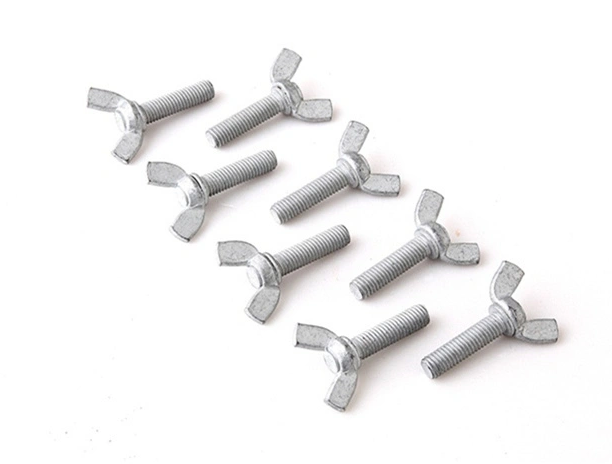
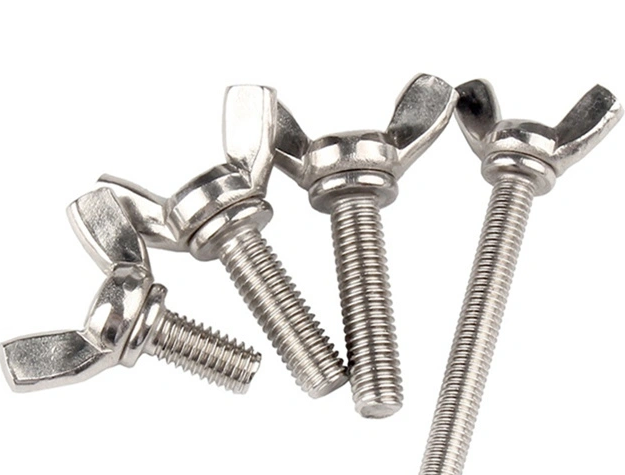
Wing nuts are hand-tightened fasteners with two wing-like projections on the sides that allow users to grip, rotate, tighten, and loosen the nut without any tool. They are used with bolts, threaded rods, studs, clamps, brackets, panels, and fixtures where frequent adjustment, quick disassembly, or tool-free operation is required. Befast's wing bolt page highlights zinc-plated butterfly wing bolts and stainless steel butterfly wing bolts, both designed for easy, tool-free fastening and convenient use in applications requiring frequent adjustment.
Wing nuts are not simply a convenience alternative to hex nuts — they are a user experience design decision that affects assembly speed, maintenance efficiency, and the overall perception of product quality. The two-wing design provides the grip area and leverage that make hand tightening practical and reliable, while the internally threaded body provides the same thread engagement and clamping capability as a standard hex nut of the same size.
| Fastener Type | Drive Method | Best Application | Key Limitation |
|---|---|---|---|
| Wing nuts | Two-wing hand grip | Modular assemblies, frequent adjustment, quick release | Limited torque compared with wrench-tightened nuts |
| Wing bolts | Two-wing bolt head | Hand-tightened bolt-side fastening | Requires threaded receiving part or nut |
| Thumb screws | Large knurled or flat head | Light-duty access panels and covers | Lower clamping force |
| Knurled knobs | Large ergonomic grip | Equipment controls and repeated fine adjustment | Larger size and higher cost |
| Butterfly nuts | Same as wing nuts — alternative name | All wing nut applications | Same as wing nuts |
The technical mechanism by which the two-wing design of butterfly nuts creates sufficient hand-tightening leverage for reliable fastening — and the practical assembly process that maximizes the speed and reliability of wing nut installation — is the core engineering and user experience knowledge that product designers need to specify wing nuts correctly for modular product applications.
The two wings of a wing nut function as moment arms — the distance from the center of the nut to the point where the user applies force to the wing. By extending the grip area outward from the center of the nut, the wing design increases the moment arm length compared with a standard hex nut or round nut, allowing the user to apply greater rotational torque with the same hand force. The wider the wings and the larger the hand-contact area, the greater the leverage and the more comfortable the tightening experience.
| Wing Nut Design Feature | Mechanical Function | User Experience Benefit |
|---|---|---|
| Two opposing wings | Creates balanced rotational leverage | Comfortable, controlled tightening motion |
| Extended wing length | Increases moment arm for torque | More clamping force achievable by hand |
| Large hand-contact area | Distributes grip force across fingers | Reduces hand fatigue during repeated adjustment |
| No tool drive required | Eliminates tool dependency | Enables tool-free installation and removal |
| Quick rotation capability | Allows fast threading and unthreading | Speeds up assembly and disassembly |
| Reusable design | Maintains thread integrity through repeated use | Suitable for frequent adjustment cycles |
Befast states that its wing bolts are used for quick, tool-free adjustments, secure fastening, convenience, and reliability — with faster hand tightening and corrosion-resistant, durable products for industrial use.
The practical assembly process for wing nuts in modular product applications follows a straightforward sequence that can be communicated to end users through simple product instructions:
Align the components to be fastened and insert the bolt, stud, or threaded rod through the aligned holes
Place a flat washer on the bolt if load distribution or surface protection is required — particularly important for soft materials or surface-sensitive components
Thread the wing nut onto the bolt by hand, starting with finger pressure to ensure the thread engages correctly without cross-threading
Rotate the wings clockwise, applying hand pressure to both wings simultaneously for balanced tightening, until the joint reaches the required holding force
For temporary or frequently adjusted assemblies, hand-tighten to the point where the joint is secure but can be released without excessive force
To release, rotate the wings counterclockwise by hand — the wing design provides the same leverage advantage for loosening as for tightening
Inspect threads periodically if the assembly is adjusted frequently — thread wear from repeated cycling should be monitored and the fastener replaced when wear becomes visible
The selection of the right wing nut specification for a specific modular product application requires evaluating the material, finish, thread size, and application environment — and understanding how wing nuts compare with alternative fastener options for different combinations of convenience, strength, and corrosion resistance requirements.
| Material and Finish | Best Application | Primary Benefit |
|---|---|---|
| Carbon steel, plain | General indoor industrial use | Cost-effective strength |
| Zinc-plated steel | Indoor or mildly corrosive environments | Better rust resistance and clean appearance |
| Black finish steel | Machinery or darker aesthetic assemblies | Functional dark appearance |
| Stainless steel | Outdoor, marine, chemical, or humid environments | Strong corrosion resistance without coating |
| Brass | Electrical, decorative, or low-corrosion applications | Conductivity and premium appearance |
Befast's fastener material categories include stainless steel, steel, and brass, with butterfly wing nut options available in zinc-plated, black, and stainless steel versions — providing the material range that covers most modular product application environments.
| Fastener Type | Tool Required | Best Application | Key Limitation |
|---|---|---|---|
| Wing nuts | No | Quick manual adjustment, modular assemblies, frequent release | Limited torque vs wrench-tightened nuts |
| Hex nuts | Yes | General fastening and higher torque joints | Slower adjustment, tool dependency |
| Nyloc nuts | Usually yes | Vibration resistance, permanent fastening | Not suitable for frequent quick release |
| Knurled knobs | No | Ergonomic repeated fine adjustment | Larger size and higher cost |
| Wing bolts | No | Hand-tightened bolt-side fastening | Requires threaded receiving part |
| Design Requirement | Recommended Wing Nut Direction |
|---|---|
| Frequent user adjustment | Standard wing nuts or butterfly nuts |
| Tool-free consumer assembly | Zinc-plated butterfly nuts for indoor products |
| Outdoor modular equipment | Stainless steel wing nuts |
| Temporary exhibition structures | Wing nuts with flat washers |
| Vibration-prone assemblies | Wing nuts with spring washers or lock washers |
| Surface-sensitive materials | Wing nuts with flat or plastic washers |
| High-load permanent joints | Consider hex nuts or engineered fastening instead |
Wing nuts and butterfly nuts deliver the most commercial value for: modular furniture and exhibition system manufacturers where tool-free assembly is a primary product feature, industrial fixture and clamp manufacturers where frequent adjustment is a core use case, temporary structure and guardrail suppliers where quick installation and removal are operational requirements, consumer product manufacturers where tool-free assembly reduces after-sales complaints and returns, agricultural and marine equipment manufacturers where field maintenance without specialized tools is a practical necessity, and medical cart and laboratory equipment manufacturers where quick reconfiguration is a daily operational requirement.
Selecting and procuring wing nuts for modular product applications requires systematic pre-order confirmation of technical requirements and supplier capability — and proper installation and maintenance practices that protect wing nut performance through repeated adjustment cycles.
Before contacting wing bolt manufacturers or wing nut suppliers, prepare and confirm the following:
Confirm the product type required — wing nut, wing bolt, or both — based on whether the hand-tightened element is on the nut side or the bolt side of the assembly
Confirm the thread diameter and pitch — verify compatibility with the bolt, stud, or threaded rod specification used in the assembly
Confirm the material requirement — steel, zinc-plated steel, stainless steel, or brass — based on the corrosion environment, aesthetic requirements, and application conditions
Confirm the wing size and ergonomic requirement — larger wings provide more leverage and are easier to grip with gloves, while smaller wings are more compact for tight assembly spaces
Confirm the matching bolt or stud specification — wing nuts should be ordered with compatible bolts or studs to ensure thread compatibility and complete assembly kit supply
Confirm the washer requirement — flat washers for load distribution and surface protection, spring washers or lock washers for vibration-prone assemblies
Confirm the quantity by size and packaging method — bulk industrial packaging for manufacturing assembly lines, retail or kit packaging for consumer products
Confirm the corrosion resistance requirement — verify that the selected material and finish are appropriate for the installation environment, including outdoor exposure, humidity, chemical contact, or marine conditions
Confirm the sample requirement — request samples for assembly testing before committing to bulk orders, particularly for new product designs where the wing nut size and ergonomics have not been validated in the actual assembly
Inspect threads for wear after repeated adjustment cycles — wing nuts used in high-frequency adjustment applications will show thread wear over time, and worn threads should be replaced before they cause assembly failures
Avoid using pliers or tools to over-tighten wing nuts beyond hand-tight limits — the wing nut design is optimized for hand tightening, and tool-applied torque can strip threads or deform the wings
Use flat washers to protect soft surfaces from the wing nut bearing face — without a washer, the nut face can mark or damage soft materials during tightening
Add spring washers or lock washers in vibration-prone assemblies — wing nuts can loosen in vibration environments if used without anti-loosening accessories
Choose stainless steel wing nuts for humid, outdoor, marine, or chemical environments — zinc-plated steel wing nuts provide adequate corrosion resistance for indoor applications but may corrode in aggressive outdoor environments
Keep threads clean from dust, paint, adhesive, and corrosion — contaminated threads increase the force required for hand tightening and reduce the reliability of the fastened joint
Replace wing nuts with bent wings or damaged threads immediately — a wing nut with a bent wing cannot be tightened reliably by hand, and a damaged thread creates assembly failure risk
Store mixed sizes in clearly labeled bins — mixing wing nut sizes in storage creates assembly errors that are difficult to detect before installation
In 2026, the tool-free assembly expectation has become a product design requirement that affects purchase decisions, user reviews, and competitive positioning across modular furniture, industrial fixtures, exhibition systems, consumer equipment, and adjustable machinery applications. Wing nuts and butterfly nuts — with their two-wing design that provides hand-tightening leverage without any tool — are the fastener solution that makes this expectation achievable in practice, delivering the quick assembly, easy adjustment, and convenient disassembly that modern modular product design demands.
Befast supplies wing bolts and butterfly fasteners designed for quick, tool-free adjustments, secure holding, corrosion resistance, and durability — with zinc-plated and stainless steel options, a broad range of sizes, and application coverage across machinery, industrial manufacturing, marine, chemical, transportation, automotive, mining, and construction sectors.
Contact Befast today to discuss your wing nut or wing bolt size, material, finish, quantity, packaging requirements, and application environment. The Befast team can support bulk fastener sourcing for modular product designs, industrial fixtures, and quick-adjustment hardware systems — and provide the samples, technical support, and supply reliability that successful modular product development requires.
Q1: What are wing nuts and why are they called butterfly nuts?
Wing nuts are hand-tightened fasteners with two wing-like projections on the sides that allow users to tighten and loosen the nut without any tool. They are called butterfly nuts because the two side wings resemble butterfly wings. The terms wing nut and butterfly nut refer to the same fastener type and are used interchangeably in most industrial and commercial contexts.
<span style="font-weight: 600; font-family: arial, helvetica, sans

 English