Search
For industrial buyers managing large-scale projects in oil and gas, petrochemical processing, power generation, refinery maintenance, and heavy industrial construction, the procurement of A193 B7 fasteners in 2026 has moved well beyond a simple price-per-piece comparison. The combination of raw material price volatility, international freight schedule uncertainty, increasingly strict project compliance requirements, and the operational consequences of fastener failures in high-temperature and high-pressure service has made wholesale A193 B7 sourcing a strategic supply chain decision that requires systematic evaluation of supplier capability, inventory depth, quality documentation, logistics planning, and dimensional compatibility with ANSI and ASME standards.
ASTM A193 / A193M covers alloy-steel and stainless-steel bolting material for pressure vessels, valves, flanges, and fittings used in high-temperature or high-pressure service and other special-purpose applications — making A193 B7 one of the most specification-critical fastener grades in industrial procurement. A193 stud bolts supplier selection for bulk orders is not simply a matter of finding the lowest unit price — it is a matter of finding a supplier whose material traceability, heat treatment control, thread accuracy, coating options, export packaging, inventory depth, and documentation capability can support the compliance requirements and delivery schedules of demanding industrial projects. Chinbe Fast offers A193 B7 fasteners including bolts and stud bolts that comply with ASTM A193 specifications, with heat treatment to achieve a minimum tensile strength of 125,000 PSI for demanding applications.
This guide covers the complete picture for distributors, EPC contractors, MRO procurement teams, and industrial project buyers: why bulk A193 fastener procurement is more complex in 2026, what A193 B7 is and why it is used in demanding industrial service, how material, heat treatment, standards compliance, and logistics affect total procurement cost, how to select the right A193 B7 specification for specific project requirements, and what procurement and storage practices protect fastener quality and project compliance through the supply chain. Secondary keywords relevant to this decision — bulk industrial fasteners, fastener logistics 2026, and custom size A193 bolts — are addressed throughout.
The commercial case for investing in systematic supplier evaluation for wholesale A193 B7 procurement — rather than defaulting to the lowest-price quotation — starts with a clear understanding of the specific risks that bulk industrial fastener procurement creates in 2026's supply chain environment.
Raw material price volatility is the most immediately visible procurement risk for bulk A193 B7 orders. Steel alloy prices — the primary cost driver for A193 B7 fasteners — have shown significant volatility in recent years, driven by energy costs, iron ore prices, trade policy changes, and global demand fluctuations. For large bulk orders, raw material price changes between quotation and delivery can affect the economics of the procurement significantly. Suppliers who cannot maintain quotation validity or who substitute lower-quality materials when alloy prices rise create both cost risk and quality risk for buyers who have committed to project schedules based on the original quotation.
International freight schedule uncertainty is the logistics risk that most directly affects project delivery timelines for buyers sourcing bulk industrial fasteners from overseas manufacturers. Ocean freight delays caused by port congestion, vessel schedule changes, and customs processing variations can disrupt construction schedules, shutdown windows, and MRO maintenance timelines in ways that create costs far exceeding the value of the fasteners themselves. A project shutdown delayed by two weeks because fasteners did not arrive on schedule creates downtime costs that dwarf the savings from choosing the lowest-price supplier.
Compliance documentation failures are the procurement risk that is most damaging to project acceptance and regulatory compliance. A193 B7 fasteners used in pressure vessels, valves, and flanges in regulated industries require material test certificates, heat treatment records, dimensional inspection reports, and marking that supports traceability from the fastener back to the heat of steel from which it was produced. Missing or inadequate documentation can delay project acceptance, trigger third-party inspection requirements, and in the most serious cases require fastener replacement — creating costs and schedule impacts that are entirely avoidable with correct supplier qualification.
Thread and dimensional incompatibility is the on-site installation risk that arises when fasteners are sourced without confirming thread type, diameter, length, and nut compatibility against the specific flange standard, pressure class, and equipment design of the application. A193 B7 stud bolts are available in UNC, UNF, and 8UN thread forms across a range of diameters — and the wrong thread type or incorrect length creates installation failures that require emergency replacement procurement under the worst possible schedule pressure.
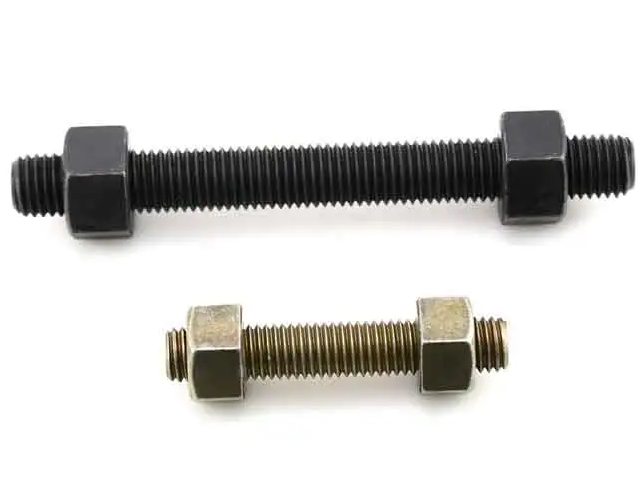
Understanding what ASTM A193 B7 is — and why it is specified for demanding industrial bolting applications rather than standard carbon steel fasteners — is essential context for procurement teams evaluating A193 stud bolts supplier options for bulk industrial projects.
ASTM A193 / A193M is a specification covering alloy-steel and stainless-steel bolting materials for pressure vessels, valves, flanges, and fittings used in high-temperature or high-pressure service and other special-purpose applications. A193 B7 is the most commonly sourced grade under this specification — a chromium-molybdenum alloy steel bolting material that is heat-treated to achieve the mechanical properties required for demanding industrial service conditions.
Chinbe Fast describes its A193 B7 fasteners as heat-treated to achieve a minimum tensile strength of 125,000 PSI — the mechanical performance level that makes A193 B7 suitable for the high-stress bolting applications in flanges, valves, pressure vessels, and pipeline systems where standard carbon steel fasteners would be inadequate. The heat treatment process — quench and temper — is the production step that most directly determines whether A193 B7 fasteners meet the mechanical requirements of the specification, and it is the quality control step that most clearly differentiates a compliant A193 B7 supplier from one producing non-compliant fasteners at a lower price.
| Product Form | Typical Application | Key Specification Element |
|---|---|---|
| A193 B7 stud bolts | Flange connections, pressure vessels | Diameter, length, thread type, heat treatment |
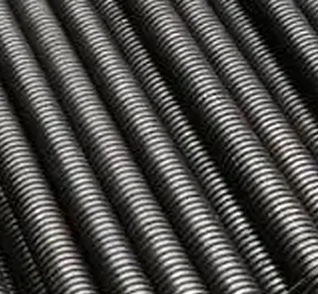
| A193 B7 fully threaded rods | Cut-to-length flexibility for distributors | Thread accuracy, length tolerance, marking |
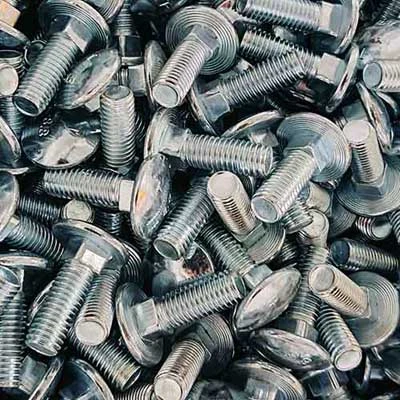
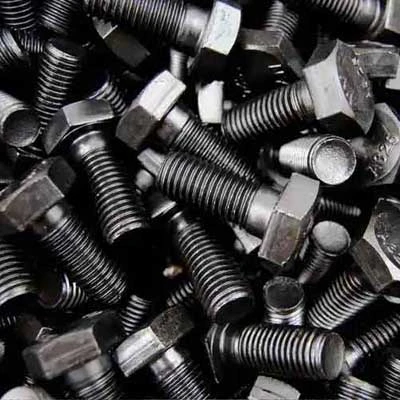
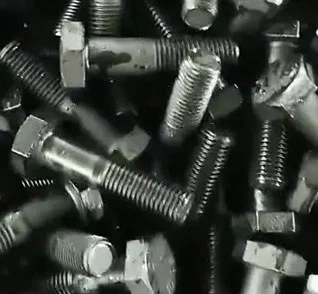
| A193 B7 heavy hex bolts | Specific bolted joint configurations | Head standard, thread type, mechanical properties |
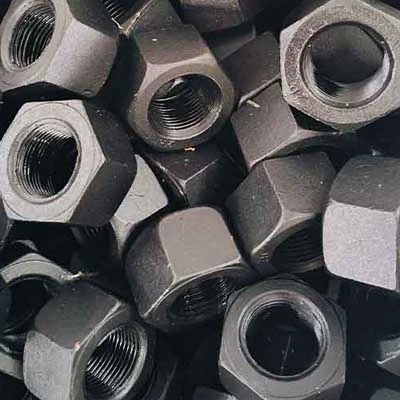
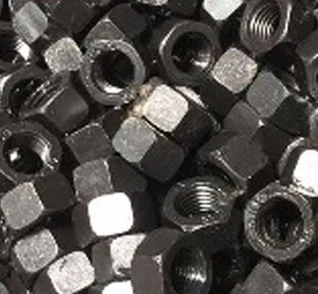
| A193 B7 with A194 2H nuts | Complete flange bolting sets | Nut grade compatibility, coating matching |
| Custom size A193 bolts | Special equipment or non-standard assemblies | Project-specific length, thread, and marking |
The technical and commercial factors that determine the total value of a wholesale A193 B7 procurement — beyond the unit price — include material quality and traceability, heat treatment process control, thread accuracy, coating selection, and dimensional compatibility with the ANSI and ASME standards that govern industrial bolting applications in most major markets.
The mechanical performance of A193 B7 fasteners — the minimum tensile strength of 125,000 PSI that makes them suitable for high-temperature and high-pressure service — is created by the quench and temper heat treatment process, not by the alloy composition alone. A fastener produced from the correct chromium-molybdenum alloy steel but heat-treated incorrectly — wrong temperature, wrong quench rate, wrong tempering temperature — may have the correct chemical composition but fail to meet the mechanical requirements of ASTM A193 B7.
For bulk industrial fasteners used in pressure-containing applications, heat treatment process control is a safety-critical quality parameter. Buyers sourcing wholesale A193 B7 should confirm that the supplier performs heat treatment in controlled furnaces with documented temperature records, that mechanical testing is performed on each heat treatment lot, and that material test certificates include the actual tensile strength, yield strength, elongation, and hardness values — not simply a statement of compliance.
For international projects where fasteners must be compatible with ANSI and ASME flange standards, dimensional compatibility is a procurement requirement that must be confirmed before ordering — not discovered during installation. A193 B7 stud bolts for ANSI/ASME flanges must be specified with the correct thread form (typically 8UN for larger diameters), the correct stud length calculated for the specific flange thickness, pressure class, and gasket thickness, and the correct nut specification (typically A194 2H heavy hex nuts) to ensure proper engagement and bolt load.
Chinbe Fast's A193 B7 page provides thread size and dimensional information including UNC, UNF, and 8UN references across different diameters — supporting buyers who need to confirm dimensional compatibility with specific flange standards and pressure classes before placing bulk orders.
Fastener logistics 2026 planning for bulk A193 B7 orders should address: ocean freight schedule reliability and buffer time for port congestion and customs processing, export packaging strength and rust prevention for long transit times, container loading efficiency for mixed-size orders, documentation completeness for customs clearance in the destination country, and regional inventory planning that maintains safety stock for urgent MRO replacement orders. The total cost of a bulk A193 B7 procurement includes not only the unit price and freight cost but the cost of schedule delays, emergency air freight for urgent replacements, and project downtime caused by logistics failures — costs that a supplier with strong inventory depth and reliable logistics planning can help avoid.
The selection of the right A193 B7 specification for a specific project application — and the evaluation of supplier capability to deliver that specification reliably in bulk quantities — requires a systematic approach that addresses the full range of technical and commercial factors that determine procurement success.
| Procurement Scenario | Recommended Strategy | Key Control Point |
|---|---|---|
| Standard flange projects | Stock A193 B7 stud bolts in standard sizes | Fast lead time and thread accuracy verification |
| Urgent MRO replacement | Supplier with large inventory and rapid quotation | Immediate availability and correct packaging |
| EPC bulk procurement | Batch production with full inspection documentation | Traceability, shipment planning, and certificate completeness |
| Corrosive environment | Select appropriate coating or alternative grade | Rust prevention and service condition compatibility |
| High-temperature service | Confirm ASTM A193 compliance and heat treatment records | Mechanical performance documentation |
| Custom flange thickness | Custom size A193 bolts with project-specific length | Length calculation, thread engagement, and nut compatibility |
| Export wholesale orders | Palletized anti-rust packaging with clear size labeling | Logistics safety and easy sorting at destination |
| Multi-country projects | ANSI/ASME-adapted sizing with compatible documentation | Standard compatibility and import documentation |
Standard A193 B7 stud bolts in common diameters and lengths provide the fastest lead time and lowest sourcing risk for projects using standard ANSI/ASME flange sizes. For distributors maintaining inventory for MRO customers, standard sizes provide the broadest coverage with the lowest inventory investment.
Custom size A193 bolts are required for special equipment, non-standard flange assemblies, or projects where the standard stud length does not provide adequate thread engagement for the specific flange thickness and gasket combination. Custom size orders require longer lead time and typically have minimum order quantity requirements — buyers should plan custom size requirements well in advance of the project installation schedule.
Wholesale A193 B7 procurement delivers the most strategic value for: oil and gas pipeline projects where large quantities of flange bolting are required on tight construction schedules, petrochemical plant turnarounds where MRO fastener availability directly affects shutdown duration and cost, power plant maintenance programs where A193 B7 is specified for high-temperature steam system bolting, refinery construction and maintenance where compliance documentation is a regulatory requirement, and industrial distributors serving these industries who need reliable bulk supply with consistent quality and documentation.
Placing a bulk A193 B7 order with confidence requires systematic pre-order confirmation of technical requirements, documentation requirements, logistics requirements, and supplier capability — and proper storage and handling practices that protect fastener quality from receipt through installation.
Before placing a bulk A193 B7 order, confirm the following:
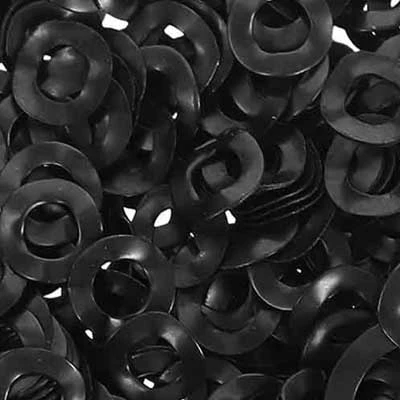
Confirm the product form required — stud bolt, fully threaded rod, heavy hex bolt, or complete bolting set with nuts and washers
Confirm the diameter and length for each size in the order — verify stud length calculations against the specific flange standard, pressure class, and gasket thickness
Confirm the thread type — UNC, UNF, or 8UN — and verify compatibility with the nut specification and flange standard
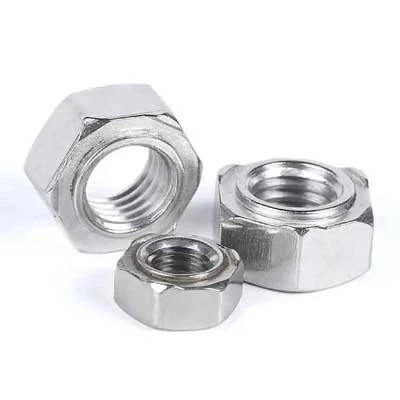
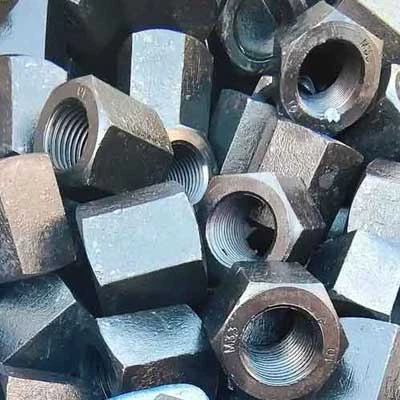
Confirm the nut specification if nuts are included — A194 2H heavy hex nuts are the standard complement to A193 B7 stud bolts for most industrial applications
Confirm the coating or finish requirement — plain, black oxide, hot-dip galvanized, or other — and verify that the coating is compatible with the service environment and does not affect thread fit
Confirm the marking requirement — ASTM grade marking, heat number, manufacturer identification — and verify that the marking meets the project specification
Confirm the certificate requirement — material test certificate, heat treatment records, dimensional inspection report, and any third-party inspection requirement
Confirm the packaging requirement for export — anti-rust packaging, size segregation, pallet configuration, and labeling for customs and receiving inspection
Confirm the required delivery date and verify that the supplier's lead time and logistics schedule can meet the project installation window with adequate buffer
Confirm the annual forecast or repeat order plan — suppliers with advance demand information can better manage inventory and production scheduling for bulk customers
Store A193 B7 fasteners in a dry, ventilated warehouse away from direct ground contact — moisture and condensation are the primary causes of rust damage during storage
Keep different sizes, thread types, and coating specifications separated and clearly labeled — mixing sizes or thread types creates installation errors that are difficult to detect before assembly
Do not mix batches without maintaining traceability records — each batch should be linked to its material test certificate and heat treatment records
Keep protective oil, coating, or packaging intact until the fasteners are ready for installation — removing protective packaging prematurely exposes fasteners to corrosion risk
Inspect threads before installation — thread damage from handling, storage, or transport should be identified before assembly rather than discovered during installation
Protect fasteners from rain, salt spray, and chemical exposure during outdoor storage — even short-term outdoor exposure can initiate corrosion on uncoated fasteners
Use first-in, first-out inventory control for distributors — rotating stock prevents long-term storage of older batches that may have developed surface corrosion
Keep certificates physically linked to the correct batch — certificate traceability is a project compliance requirement that must be maintained from receipt through installation
In 2026, the industrial buyers who manage bulk A193 B7 procurement most successfully are those who evaluate suppliers on the complete set of factors that determine total procurement value — not only unit price, but inventory depth for urgent orders, heat treatment process control for mechanical compliance, documentation completeness for project acceptance, dimensional accuracy for ANSI/ASME compatibility, export packaging quality for logistics protection, and response speed for the schedule-driven demands of industrial project procurement.
Chinbe Fast offers A193 B7 fasteners including bolts and stud bolts that comply with ASTM A193 specifications, with heat treatment to achieve a minimum tensile strength of 125,000 PSI, thread size and dimensional information across UNC, UNF, and 8UN references, and a broad fastener portfolio that supports bulk industrial fasteners procurement across multiple product forms and sizes.
Contact Chinbe Fast today to discuss your A193 B7 stud bolt sizes, thread requirements, quantity, coating specification, certificate requirements, ANSI/ASME compatibility needs, packaging method, and delivery schedule. Chinbe Fast can help evaluate a bulk A193 B7 stud bolts sourcing solution that meets your project compliance requirements and delivery timeline.
Q1: What is A193 and what does the B7 grade designation mean?
ASTM A193 / A193M is a specification covering alloy-steel and stainless-steel bolting materials for pressure vessels, valves, flanges, and fittings used in high-temperature or high-pressure service. B7 is the most commonly sourced grade under this specification — a chromium-molybdenum alloy steel bolting material that is heat-treated to achieve a minimum tensile strength of 125,000 PSI, making it suitable for demanding industrial bolting applications.
Q2: What are A193 B7 stud bolts used for?
A193 B7 stud bolts are widely used for industrial bolting in flanges, valves, pressure vessels, pipelines, heat exchangers, and other high-temperature or high-pressure service applications in oil and gas, petrochemical, power generation, refinery, and chemical processing industries.
Q3: What should buyers check before placing a wholesale A193 B7 order?
Buyers should confirm the product form, diameter, length, thread type, nut specification, coating or finish, marking requirements, certificate requirements, packaging for export, required delivery date, and whether the supplier has adequate inventory depth for the required quantity and size range.
Q4: Can A193 B7 stud bolts be customized for non-standard applications?
Yes. Custom size A193 bolts can be produced to project-specific diameter, length, thread type, coating, marking, and packaging requirements. Custom size orders typically require longer lead time and minimum order quantities — buyers should plan custom requirements well in advance of the project installation schedule.
Q5: How do raw material price changes affect wholesale A193 B7 procurement?
Steel alloy price volatility can affect quotation validity, delivery cost, and the risk of material substitution by low-cost suppliers. Buyers managing large bulk orders should confirm quotation validity periods, consider forward purchasing for large projects, and qualify suppliers whose quality systems prevent material substitution when alloy prices rise.
Q6: Why is a bulk A193 B7 stud bolts manufacturer in China a practical sourcing option?
A qualified Chinese manufacturer can support competitive pricing for bulk orders, broad size range availability, export packaging capability, fast quotation response, and project-based customization — provided the supplier is properly qualified for ASTM A193 compliance, heat treatment process control, documentation completeness, and export logistics reliability.
Q7: How can buyers reduce logistics risk in 2026 for bulk fastener orders?
Buyers should confirm inventory availability before ordering, verify lead time against the project installation schedule with adequate buffer, confirm export packaging quality for rust prevention during transit, ensure documentation completeness for customs clearance, plan regional safety stock for urgent MRO replacement needs, and establish a long-term supplier relationship that supports priority scheduling for time-critical orders.

 English