Search
A threaded rod is one of the cheapest line items on a BOM—until the wrong standard shows up on site.
Then the "small part" becomes the reason a flange won't seat, inspectors reject a batch, or your crew loses a day chasing paperwork and re-ordering. It happens on international projects more than anyone admits—and it almost always traces back to one decision made too early and too casually: which standard, which thread system, which grade.
This guide breaks down threaded rods under ASTM A193 vs DIN 975 so procurement and engineering teams can match strength class, dimensions, and documentation—especially when sourcing threaded rods China for export projects.
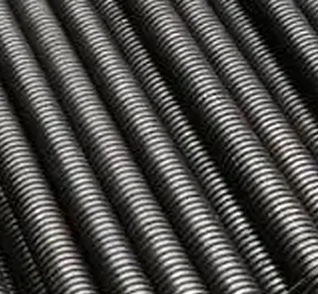
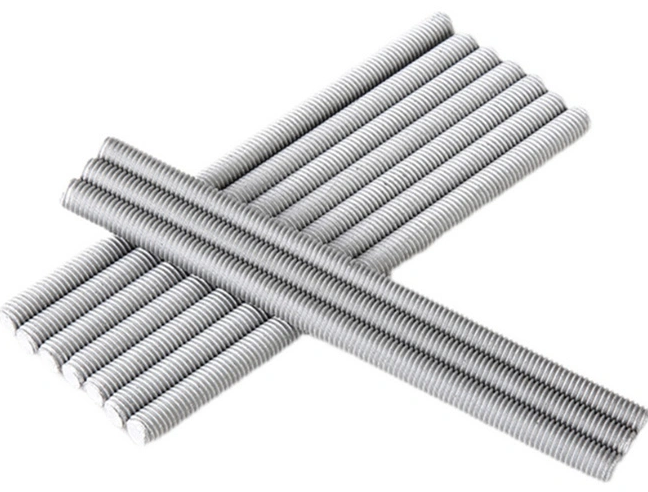
Threaded rods are fully threaded fasteners used for clamping, anchoring, structural hanging, and bolted assembly across virtually every industrial sector. Simple in form—but heavily dependent on specification for reliable performance.
| Term | Definition | Key Distinction |
|---|---|---|
| Threaded rod | Fully threaded along entire length | General-purpose; length cut to requirement |
| Stud bolt | Threaded at both ends, plain shank in middle | Used in flanged pressure joints; tighter spec |
| Anchor rod | Embedded in concrete; may have hook or plate end | Structural standard applies (ASTM F1554, etc.) |
Using these terms interchangeably on a drawing or PO is a common source of wrong-product deliveries.
On a controlled project—EPC, petrochemical, power, or public infrastructure—the standard on your drawing is a contract requirement. It defines:
Mechanical properties (yield, tensile, hardness)
Thread system and pitch tolerance
Dimensional requirements (diameter, straightness, length tolerance)
Required markings and documentation
A rod that "looks right" but references the wrong standard will fail inspection—regardless of actual material quality. Getting this right upstream prevents NCRs, delays, and re-procurement costs downstream.
Understanding this distinction prevents most sourcing mistakes.
ASTM A193 is a material and mechanical performance standard. It specifies alloy composition, heat treatment, tensile/yield strength, hardness, and test requirements for bolting used in high-temperature and high-pressure service. It does not specify a dimensional product form—it tells you what the steel must do under load and temperature.
DIN 975 is a dimensional product form standard. It defines the physical form of a fully threaded rod: length, diameter, thread geometry, and tolerance. It does not define the material grade or mechanical properties on its own. Strength class (4.8, 8.8, 10.9, 12.9) must be specified separately alongside DIN 975 to form a complete specification.
This is the most common source of confusion on international projects: treating DIN 975 as a complete specification when it is only half of one.
Every threaded rod on a controlled project must travel a clear compliance path:
Drawing callout → Purchase order → Mill certificate → Inspection → Site acceptance
A break anywhere in that chain—a PO that omits grade, a cert that doesn't match the heat number, a rod with no marking—stops the project. Define requirements completely at the PO stage and you prevent problems at every stage that follows.
A 20mm diameter rod under DIN 975 (metric thread, M20×2.5 pitch) and a 3/4" rod under ASTM A193 (UNC thread, 3/4-10 pitch) are close in physical size but completely incompatible in thread system, nut fit, and documentation requirements. Mixing them on site creates installation failures and safety risk.
| Parameter | Metric (DIN/ISO) | Inch (ASTM/ASME) |
|---|---|---|
| Designation | M20, M24, M30 | 3/4", 1", 1-1/4" |
| Pitch | Coarse: M20×2.5 | UNC: 3/4-10 |
| Tolerance class | 6g (external) | 2A (external) |
| Nut compatibility | DIN 934 / ISO metric nuts | ASME B18.2.2 hex nuts |
Never assume metric nuts fit inch rods or vice versa. Always specify thread system and confirm nut compatibility before ordering.
ASTM A193 — Grade Selection Logic
ASTM A193 covers alloy and stainless steel bolting for pressure vessels, valves, flanges, and fittings. Key grades for threaded rods:
| Grade | Material | Typical Application |
|---|---|---|
| B7 | Cr-Mo alloy steel, Q&T | High-temp/pressure; most common |
| B7M | B7 with hardness cap | Sour service (NACE) |
| B8 / B8M | 304 / 316 stainless | Corrosive service |
| L7 | Low-temp alloy steel | Cryogenic and low-temp service |
Each grade specifies minimum yield, tensile, elongation, reduction of area, and hardness. Test reports must reference the specific grade and heat number.
DIN 975 — Property Class Logic
DIN 975 defines the rod form. Mechanical strength is specified via property class:
| Property Class | Min Yield (MPa) | Min Tensile (MPa) | Typical Use |
|---|---|---|---|
| 4.8 | 320 | 420 | Light structural, non-critical |
| 8.8 | 640 | 800 | General structural and mechanical |
| 10.9 | 900 | 1040 | High-load mechanical assemblies |
| 12.9 | 1080 | 1220 | Critical high-strength applications |
A complete DIN-based specification reads: DIN 975 + Property Class 8.8 + Coating + Thread tolerance. Missing any element leaves the supplier room to substitute.
| Finish | Corrosion Protection | Key Consideration |
|---|---|---|
| Zinc electroplated | Moderate | Check plating thickness for export storage |
| Hot-dip galvanized (HDG) | High | Thread overcut required for nut fit |
| Black oxide | Minimal | For dry indoor use only |
| PTFE / Xylan coating | High, low friction | Torque coefficient changes; specify separately |
| Plain (no coating) | None | Requires immediate protection or use |
A complete cert pack for threaded rods on a controlled project:
MTC/CMTR: heat number, chemistry, mechanical test results
Coating certificate: process, thickness, standard reference
Dimensional inspection report: diameter, pitch, length, straightness
Marking confirmation: grade/property class, standard, manufacturer ID visible on rod or bundle tag
Use this reference before writing your PO or reviewing a supplier's offer.
| Spec Element | ASTM A193 Package | DIN 975 Package |
|---|---|---|
| Standard role | Material + mechanical | Dimensional form |
| Thread system | Inch (UNC/UNF) | Metric (ISO) |
| Grade reference | B7, B7M, B8, B8M, L7 | Property class: 4.8 / 8.8 / 10.9 / 12.9 |
| Nut standard | ASME B18.2.2 | DIN 934 / ISO 4032 |
| Key documents | CMTR with heat trace | MTC + property class cert |
| Primary market | Oil & gas, power, petrochemical | Construction, MEP, machinery, Europe/Asia projects |
| Strength verification | Full mechanical test per grade | Per property class; request test cert |
Project specification calls out pressure/temperature bolting (ASME B16.5, B31.3, pressure vessel codes)
Client or inspector requires full CMTR with heat number traceability
Inch thread system is specified (UNC/UNF) and nut compatibility is critical
Sour service or cryogenic service requires grade-specific hardness limits (B7M, L7)
EPC or owner spec explicitly references ASTM A193
Project is metric-dimension driven (European or Asian civil/structural standard)
Strength class is clearly specified alongside the dimensional standard
MEP hangers, structural supports, or machinery assembly with standard metric nuts
Coating and tolerance class are defined in the specification package
| Project Condition | Recommended Standard |
|---|---|
| Flanged pipe joint, high temp/pressure | ASTM A193 B7 |
| Structural steel connection, metric project | DIN 975 + 8.8 |
| Sour service, H₂S environment | ASTM A193 B7M |
| HVAC/MEP hanger, light load, indoor | DIN 975 + 4.8 or 8.8 |
| Cryogenic piping | ASTM A193 L7 |
| High-load machinery, metric design | DIN 975 + 10.9 or 12.9 |
Construction and steel structures (anchor bolts, structural connections)
MEP and HVAC (pipe hangers, duct supports, suspended ceilings)
Petrochemical and power (flanged joints, pressure equipment bolting)
OEM machinery and fabrication shops (assemblies, jigs, fixtures)
No thread mismatch on site: installation runs without rework
Fewer NCRs: correct documentation satisfies inspectors first time
Predictable clamp load: known grade = known torque/tension relationship
Lower procurement risk: correct standard prevents substitution and re-order cost
Standard confusion DIN 975 alone is not a complete specification. Suppliers quoting "DIN 975" without a property class are quoting a dimensional form, not a strength level. Require both on every PO.
Mixed lots and inconsistent marking Unmarked or incorrectly marked rods create traceability gaps that fail inspection. Require bundle tags with heat number, grade/property class, standard, and batch reference.
Coating thickness affecting nut fit Hot-dip galvanized coatings add 45–85 microns per surface. Standard thread tolerances do not accommodate this. Require oversized thread cutting (overcut) before galvanizing—and verify with a nut run-down test before shipment.
Substitution risk "Equivalent material" substitutions without engineering approval are a real risk on low-supervision orders. Lock in grade, standard, and documentation requirements in the PO, and verify with pre-shipment inspection.
Confirm: standard + grade/property class + thread system + pitch + tolerance class + length
Define coating system; specify overcut requirement if HDG is used
Require cert pack: heat number traceability, mechanical test results, coating verification
Pre-shipment inspection: thread gauge (go/no-go), length, straightness, visual marking check
Trial assembly: nut run-down test using the project's specified nuts and washers
Verify packaging for export: thread protection caps, bundle labeling, moisture protection
Store indoors or under cover; moisture causes white rust on zinc coatings within days in humid conditions
Separate batches by heat/lot; do not mix grades or coatings in the same storage area
Apply FIFO: use oldest stock first to prevent plating degradation over time
Keep thread protection caps in place until point of installation
Avoid dragging bundles across hard surfaces—thread damage at the rod end causes nut cross-threading on site
For export shipments: wrap bundles in moisture-barrier packaging; label with standard, grade, and heat number on the outside
Run a nut down the full thread length by hand before assembly; resistance indicates damage or coating buildup
Clean threads before torquing; debris under the nut changes the torque/tension relationship
Apply lubrication only where specified; some ASTM A193 applications require specific lubricants for torque calculations
Inspect for corrosion on rods stored on site for extended periods before use
Match coating to environment: zinc plate for dry indoor use; HDG for outdoor structural; stainless for chemical or marine exposure
Avoid contact between carbon steel rods and stainless nuts (or vice versa) in wet environments—bimetallic corrosion accelerates rapidly
International projects don't fail because teams don't buy threaded rods—they fail because teams buy rods that don't match the project's standard, thread system, or documentation expectations. When you treat ASTM A193 vs DIN 975 as a complete spec package decision—not just a label—approvals get easier, installations run faster, and the cheapest item on your BOM stops being the most expensive problem on your schedule.
When sourcing threaded rods China for export projects, the same principle applies: define the full specification, require the complete cert pack, and verify before shipment. The paperwork is the product.
For product options, grade availability, coating specifications, and export-ready documentation support, visit the threaded rods product page or contact the threaded rods China supply team directly.
Q1: Are DIN 975 threaded rods equivalent to ASTM A193 threaded rods?
No—they operate in different specification dimensions. DIN 975 defines the physical form of a threaded rod (dimensions, thread geometry, tolerance). ASTM A193 defines material and mechanical performance (strength, hardness, heat treatment). A project requiring ASTM A193 B7 cannot be satisfied by a DIN 975 rod unless the material and mechanical requirements are independently verified and documented to B7 levels—which requires a separate CMTR, not just a dimensional cert.
Q2: How do I avoid mixing metric-thread rods with UNC nuts (or vice versa)?
Specify thread system explicitly on every PO and drawing: "M20×2.5 metric coarse" or "3/4-10 UNC"—not just diameter. Color-code or physically segregate metric and inch threaded rods in the warehouse and on site. Conduct a nut run-down test on receipt using the project's actual nuts—a metric nut will not start on a UNC rod and vice versa, making the mismatch immediately obvious before installation.
Q3: What documents should I request when importing threaded rods from China?
At minimum: MTC/CMTR with heat number, chemical composition, and mechanical test results; coating certificate with process, thickness, and standard reference; dimensional inspection report; and bundle/batch marking confirmation. For ASTM A193 grades, the CMTR must reference the specific grade (B7, B8M, etc.) and be traceable to the heat number marked on the product. For threaded rods China orders on controlled projects, also request a pre-shipment inspection report from an approved third-party inspector.
Q4: Does hot-dip galvanizing affect thread fit on threaded rods?
Yes, significantly. HDG adds 45–85 microns of zinc per surface, which reduces thread clearance and can prevent nut engagement on standard-tolerance threads. The correct approach is to cut threaded rods with an oversized thread (overcut) before galvanizing, so the coating brings the thread back to within tolerance. Always specify overcut requirement when ordering HDG rods, and verify with a nut run-down test before accepting the shipment.
Q5: When should I specify a stud bolt instead of a general threaded rod?
Specify a stud bolt when the application is a flanged pressure joint governed by ASME B16.5, B31.3, or similar piping codes. Stud bolts have a defined plain shank between two threaded ends, controlled thread length, and are typically supplied under ASTM A193 with matching nuts under ASTM A194. A general threaded rod cut to length is not an acceptable substitute in these applications—the stud bolt specification exists because thread engagement length, mechanical properties, and traceability requirements are tightly controlled for pressure safety.

 English